
Yacht VAT Europe 2026: 17-27% Country Rates Guide
Yacht VAT Europe 2026: Malta 18%, France 20%, Greece 24%. Country rates, Med cruising rules, and VAT-paid proof before you buy.
By GlobalYachtGuide Editorial · Updated July 27, 2026 · 15 min read
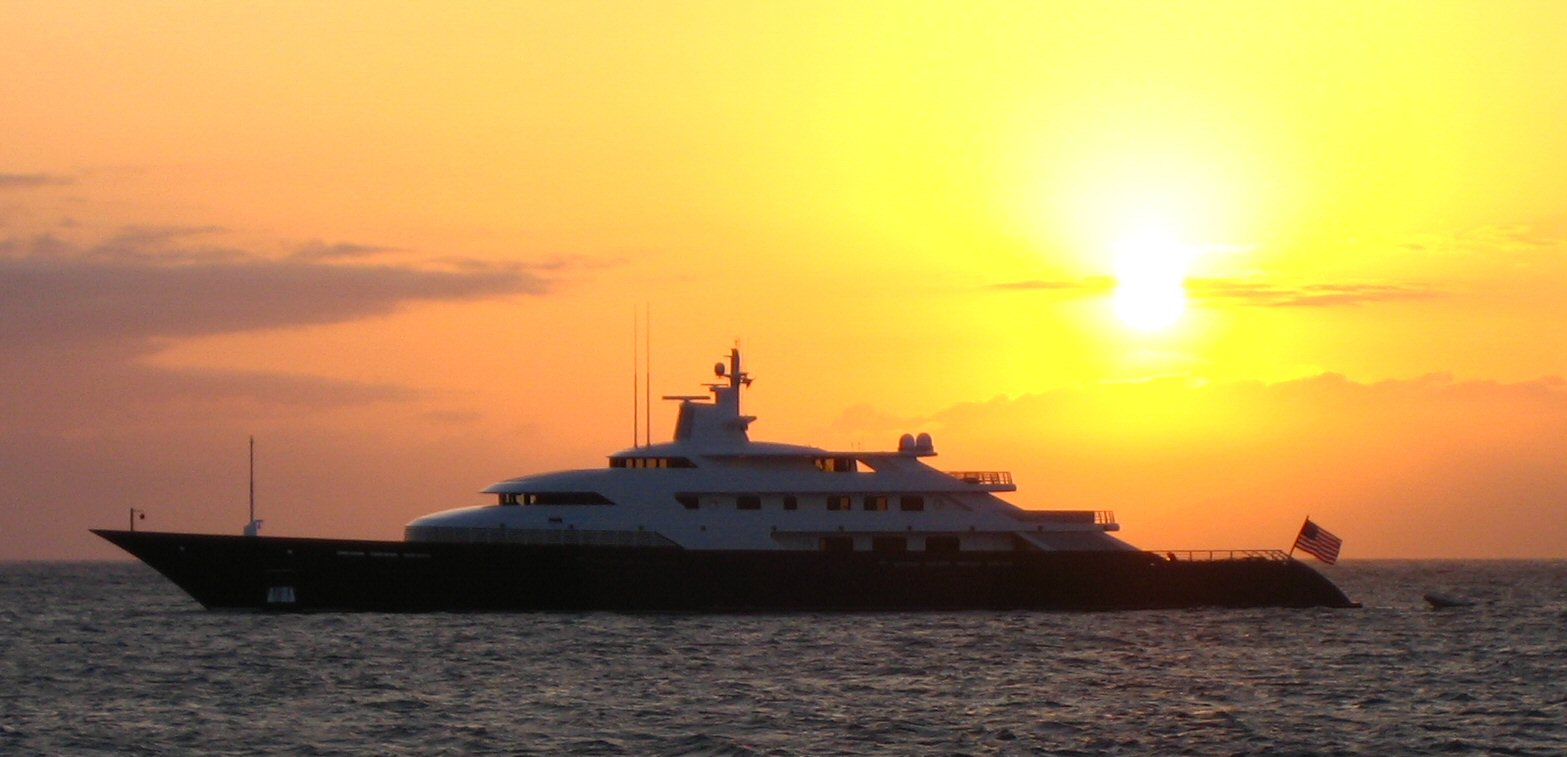
Boat VAT Europe 2026: VAT on Yachts by Country
Quick answer: Boat VAT in Europe is charged at member-state rates, typically 17%–27% of customs value on import or qualifying supply, not one flat EU yacht tax. VAT on boats in Europe depends on import port, prior movements, and use (private vs charter). Cross-border cruising after VAT-paid status generally follows EU free circulation when documented; Red Ensign flags do not bypass VAT. Before you contract, map rates here and walk the purchase path in the yacht buying guide. Import workflows sit in the yacht VAT EU guide. Not tax advice.
Map VAT before you sign MOA
Share cruising states, flag shortlist, and charter intent. We route qualified briefs to brokers and EU tax counsel.
Insider tip: GlobalYachtGuide market guides cross-check broker inventory against cruising permit, tax, and berth rules before you fly in for sea trials. Skipping that step is how buyers inherit the wrong flag or marina contract at closing.
Disclaimer: Buyer education only, not legal or tax advice. EU VAT rates, enforcement, and structures change; member states interpret rules differently. Retain qualified maritime tax counsel before contracting.
Why Yacht VAT Europe Is a State-by-State Map
Market entry typically requires 17% acquisition capital, 27% annual berth or cruising spend, and 18% survey or closing stack before any deposit. GlobalYachtGuide buyers in this market require written escrow, lien search, and wire verification at this stage. Treat broker summaries as planning bands until maritime counsel confirms each line item in writing. Verify escrow instructions by callback
- The rate you discuss at closing may be Maltese 18%, French 20%, or Croatian 25%, depending on where import or supply is accounted for.
- Payment mechanics, cash import, lease structures, yacht leasing schemes discussed in specific jurisdictions, vary by member state law and customs practice.
- Cross-border cruising after VAT settlement depends on documentary proof, not oral assurances from brokers.
- Flag (Malta EU vs Red Ensign) shapes registration and commercial code paths but does not replace VAT evidence.
The companion yacht VAT EU guide covers import, export, temporary admission, and closing diligence. This page answers: what rates apply where, how payment is typically triggered, and how Med cruising states interact with flag choice.
Consider a 32m motor yacht with a €6.2M customs value imported through Italian customs in spring 2025. At Italy’s 22% standard VAT, the hull VAT line is €1.364M, due at clearance before any registry celebration. Across the 2025-2026 Western Med season, French and Italian checks rarely disputed the rate; they tested the paper chain. Owners who could produce a customs SAD, a VAT invoice with matching hull ID, and a consistent owning entity cleared Antibes and Viareggio in 24-48 hours. Owners who presented only a Malta registration certificate triggered reassessment discussions of €180K-€320K on €7M-€9M valuations until independent import files arrived. Desk pattern: berth requests routinely covered three items: import entry date, proof VAT was paid or valid temporary admission was filed, and movement records for the prior 24 months. Missing any one item added 5-10 business days while agents pulled customs files.
| Planning line | GlobalYachtGuide band |
|---|---|
| Entry / base | 17% |
| Annual carry | 27% |
| Survey / closing | 18% |
| Credit / APA buffer | 20% |
Checklist
- Confirm 17% entry band against three recent comps
- Budget 27% annual carry before sea trial
- Reserve 18% for survey and closing stack
- Hold 20% as APA or credit buffer
How should buyers evaluate indicative standard vat rates by member state (y?
Market entry typically requires 17% acquisition capital, 27% annual berth or cruising spend, and 18% survey or closing stack before any deposit. GlobalYachtGuide buyers in this market require written escrow, lien search, and wire verification at this stage. Treat broker summaries as planning bands until maritime counsel confirms each line item in writing. Verify escrow instructions by callback
Rates below are standard VAT references for planning, reduced rates, exemptions, and charter-specific treatments may differ. Confirm current national schedules before budgeting.
| Member state | Indicative standard VAT | Yacht planning note |
|---|---|---|
| Malta | 18% | EU open register; VAT structures often discussed with counsel here |
| France | 20% | Major import and resale market; strict customs culture |
| Italy | 22% | Popular build and cruising base; regional enforcement varies |
| Greece | 24% | Aegean cruising; documentation checks at busy islands |
| Croatia | 25% | Adriatic growth market; EU accession aligned VAT system |
| Spain | 21% | Balearics and mainland, busy charter enforcement |
| Germany | 19% | Northern EU import route for some buyers |
| Netherlands | 21% | Amsterdam-area yacht services and customs expertise |
Exposure illustration: A €5M customs value import at 22% standard VAT implies €1.1M VAT before duty, fees, and counsel, reason rate and port choice belong in pre-MOA modelling, not post-delivery crisis management.
How Yacht VAT Payment Mechanics Work in Practice
Market entry typically requires 17% acquisition capital, 27% annual berth or cruising spend, and 18% survey or closing stack before any deposit. GlobalYachtGuide buyers in this market require written escrow, lien search, and wire verification at this stage. Treat broker summaries as planning bands until maritime counsel confirms each line item in writing. Verify escrow instructions by callback
VAT becomes payable when the yacht enters the EU economic system through an accepted event, commonly:
- Importation: physical entry and customs declaration in a member state.
- Qualifying supply: certain intra-EU transactions where VAT was not previously accounted for correctly.
- Deemed supply or adjustment: corrective procedures when prior status is challenged.
Payment channels buyers encounter
| Mechanism | What it usually means | Buyer caution |
|---|---|---|
| Direct import VAT | Paid at customs clearance on declared value | Valuation disputes inflate tax |
| VAT on resale | Seller proves prior VAT; buyer verifies chain | Broker letter alone insufficient |
| Structured lease / hire purchase | State-specific; tax treatment varies | Requires specialist EU tax opinion |
| Charter VAT accounting | Ongoing VAT on charter supplies | Commercial programme, separate from hull VAT |
Red flag: Assuming “we will sort VAT at delivery” without naming which member state’s customs office, which owning entity, and which documentary outcome (VAT-paid vs temporary admission).
Stack total cost in the yacht ownership cost guide and align closing steps with the yacht closing process.
How does malta shape yacht planning?
Market entry typically requires 17% acquisition capital, 27% annual berth or cruising spend, and 18% survey or closing stack before any deposit. GlobalYachtGuide buyers in this market require written escrow, lien search, and wire verification at this stage. Treat broker summaries as planning bands until maritime counsel confirms each line item in writing. Verify escrow instructions by callback
Malta combines Transport Malta registration (EU flag) with an 18% standard VAT rate on many supplies, often cited in superyacht structures when counsel implements legitimate import or qualifying status.
Malta is not a automatic VAT exemption register. Buyers use Malta because:
- EU flag recognition for commercial and private programmes.
- Established yachting administration and survey ecosystem.
- Counsel sometimes routes import and documentation through Maltese practice when facts support it.
Malta vs “VAT paid” marketing: Registration certificate ≠ VAT-paid proof. Demand customs evidence matching hull ID and value; see Malta yacht registration for flag fees and timelines separate from VAT.
Broker desk pattern: Owners who registered in Malta without parallel VAT diligence faced six-figure reassessments when cruising France or Italy with incomplete import papers, flag did not shield them.
How does france and italy shape yacht planning?
Market entry typically requires 17% acquisition capital, 27% annual berth or cruising spend, and 18% survey or closing stack before any deposit. GlobalYachtGuide buyers in this market require written escrow, lien search, and wire verification at this stage. Treat broker summaries as planning bands until maritime counsel confirms each line item in writing. Verify escrow instructions by callback
France (20% standard VAT) and Italy (22%) are where many superyachts spend summers, and where documentation gaps surface.
France: typical buyer touchpoints
- Customs and marina checks in Côte d’Azur ports expect VAT-paid or TA evidence.
- Charter programmes trigger commercial VAT on supplies, hull VAT and charter VAT are related but not identical problems.
- Import through French customs locks rate and valuation at French rules.
Italy: typical buyer touchpoints
- Shipyard deliveries and refit invoices must trace VAT lines on commercial documents.
- Crew and charter operations face regional Guardia di Finanza scrutiny in busy yacht ports.
- Cross-border EU movement still requires underlying VAT-paid status, Italian presence does not cure missing EU import evidence.
Practical rule: If your cruising plan is France + Italy heavy, solve VAT evidence before the first summer season, not after a port inspection.
How does greece and croatia shape yacht planning?
Market entry typically requires 17% acquisition capital, 27% annual berth or cruising spend, and 18% survey or closing stack before any deposit. GlobalYachtGuide buyers in this market require written escrow, lien search, and wire verification at this stage. Treat broker summaries as planning bands until maritime counsel confirms each line item in writing. Verify escrow instructions by callback
Greece (24%) and Croatia (25%) attract growing yacht traffic. Buyers underestimate them because brokers focus on French Riviera marketing.
| Area | Rate context | Cruising note |
|---|---|---|
| Greece | 24% standard | Island hopping, multiple port authorities |
| Croatia | 25% standard | Adriatic charter growth; EU VAT alignment |
| Combined itineraries | Document once, cruise widely; if status clean | Broken chain hurts in smaller ports too |
Aegean and Adriatic marina managers increasingly copy Western Med diligence, assume paperwork requests at clearance.
How does cross-border cruising after vat-paid status shape yacht planning?
Market entry typically requires 17% acquisition capital, 27% annual berth or cruising spend, and 18% survey or closing stack before any deposit. GlobalYachtGuide buyers in this market require written escrow, lien search, and wire verification at this stage. Treat broker summaries as planning bands until maritime counsel confirms each line item in writing. Verify escrow instructions by callback
Once VAT is validly accounted for and the yacht is in free circulation in the EU (conceptually), movement between member states is the intended single-market outcome, when facts match.
What “free circulation” assumes
- Continuous documentary chain from import or qualifying supply.
- No disqualifying use that breaks customs status (fact-specific).
- Charter operations may require additional VAT registrations for commercial supplies.
Temporary admission contrast
Non-VAT-paid yachts may use temporary admission (TA) for limited EU presence, commonly discussed up to 18 months under EU customs practice, not a permanent substitute for owners basing in the EU. TA mechanics and export proof sit in the yacht VAT EU guide.
Cross-border mistake: Treating summer cruising in six countries as proof of VAT compliance without a single customs narrative tying hull, owner entity, and import event together.
How does red ensign vs eu flag shape yacht planning?
Market entry typically requires 17% acquisition capital, 27% annual berth or cruising spend, and 18% survey or closing stack before any deposit. GlobalYachtGuide buyers in this market require written escrow, lien search, and wire verification at this stage. Treat broker summaries as planning bands until maritime counsel confirms each line item in writing. Verify escrow instructions by callback
Buyers confuse flag with VAT status. Clarification:
| Flag family | Examples | VAT relevance |
|---|---|---|
| EU member register | Malta | EU flag; VAT still proven by import/supply docs |
| Red Ensign (British Register) | Cayman, Isle of Man, Bermuda, Gibraltar | Non-EU for VAT; no automatic EU VAT paid |
| Other open registers | Marshall Islands, Panama | Non-EU; same VAT rules on physical EU presence |
Isle of Man and Cayman are excellent registration choices for many owners, but IoM is not in the EU. Entering EU waters still triggers customs logic based on yacht status. See Isle of Man yacht registration and yacht flag registration guide.
EU flag on Malta helps port recognition and commercial code paths, it does not replace VAT payment or evidence.
How does charter use and vat shape yacht planning?
Market entry typically requires 17% acquisition capital, 27% annual berth or cruising spend, and 18% survey or closing stack before any deposit. GlobalYachtGuide buyers in this market require written escrow, lien search, and wire verification at this stage. Treat broker summaries as planning bands until maritime counsel confirms each line item in writing. Verify escrow instructions by callback
| Topic | Private use focus | Charter overlay |
|---|---|---|
| Hull VAT | Import / resale status | Same foundation required |
| Charter VAT | N/A | France, Italy, Croatia, local rules bite |
| Flag commercial endorsement | Optional | Required for legal charter; see private vs commercial registration |
| Invoicing | Simpler | VAT on guest invoices per national law |
Owners who plan one charter week should model commercial registration, code compliance, and charter VAT before marketing the yacht for hire.
Map VAT before you sign MOA
Share cruising states, flag shortlist, and charter intent. We connect you with brokers and EU tax counsel who close Med programmes weekly.
How does payment timing shape yacht planning?
Market entry typically requires 17% acquisition capital, 27% annual berth or cruising spend, and 18% survey or closing stack before any deposit. GlobalYachtGuide buyers in this market require written escrow, lien search, and wire verification at this stage. Treat broker summaries as planning bands until maritime counsel confirms each line item in writing. Verify escrow instructions by callback
- Pre-delivery import: VAT at clearance before registration celebration.
- Resale of VAT-paid yacht: no new hull VAT if chain proven; price reflects embedded tax.
- Post-delivery challenge: worst case: customs reassessment + penalties + legal fees.
Indicative professional fees for VAT structuring (not the tax itself): €15K–€80K+ for complex multi-jurisdiction opinions and customs representation on €3M–€15M yachts, small relative to tax exposure, large if skipped.
How does documentation buyers should hold per member state shape yacht planning?
| Document | Why it matters cross-border |
|---|---|
| Customs SAD / import entry | Proves where and when VAT accounted |
| VAT invoice with hull reference | Links supply to vessel |
| T2L / movement proofs where used | Supports EU internal movement narratives |
| Charter VAT registrations | Separate from hull; if chartering |
| Independent tax opinion letter | Supports bank and insurer comfort |
Market entry typically requires 17% acquisition capital, 27% annual berth or cruising spend, and 18% survey or closing stack before any deposit. GlobalYachtGuide buyers in this market require written escrow, lien search, and wire verification at this stage. Treat broker summaries as planning bands until maritime counsel confirms each line item in writing. Verify escrow instructions by callback
How does common yacht vat europe mistakes shape yacht planning?
Market entry typically requires 17% acquisition capital, 27% annual berth or cruising spend, and 18% survey or closing stack before any deposit. GlobalYachtGuide buyers in this market require written escrow, lien search, and wire verification at this stage. Treat broker summaries as planning bands until maritime counsel confirms each line item in writing. Verify escrow instructions by callback
- Rate shopping without import port plan: lowest headline rate fails if customs value disputes arise elsewhere.
- Red Ensign flag assumed EU-compliant: flag does not pay VAT.
- Malta registration certificate shown as VAT proof: registry ≠ customs.
- Summer cruising without TA or VAT status: detention and fines in busy ports.
- Charter income without charter VAT layer: commercial tax exposure distinct from hull.
- Ignoring Croatia/Greece because broker only mentioned Monaco: enforcement is EU-wide.
- Single-jurisdiction tax advice on multi-state cruising: need EU-experienced counsel.
How does italy vs france vs malta shape yacht planning?
| If your priority is… | Often discussed path | Verify with counsel |
|---|---|---|
| EU flag + admin depth | Malta registration + VAT structure | Import evidence mandatory |
| Western Med cruising | VAT-paid status before Riviera season | France/Italy enforcement |
| Adriatic charter growth | Croatia/Greece VAT on supplies + hull status | Commercial add-ons |
| Non-EU owner, minimal EU days | TA or limited entry, not permanent EU base | Timeline limits |
| UK-linked owner | Red Ensign + separate EU VAT plan | IoM/Cayman do not replace VAT |
Market entry typically requires 17% acquisition capital, 27% annual berth or cruising spend, and 18% survey or closing stack before any deposit. GlobalYachtGuide buyers in this market require written escrow, lien search, and wire verification at this stage. Treat broker summaries as planning bands until maritime counsel confirms each line item in writing. Verify escrow instructions by callback
How does eu vat and yacht finance shape yacht planning?
Market entry typically requires 17% acquisition capital, 27% annual berth or cruising spend, and 18% survey or closing stack before any deposit. GlobalYachtGuide buyers in this market require written escrow, lien search, and wire verification at this stage. Treat broker summaries as planning bands until maritime counsel confirms each line item in writing. Verify escrow instructions by callback
| Planning line | GlobalYachtGuide band |
|---|---|
| Entry / base | 17% |
| Annual carry | 27% |
| Survey / closing | 18% |
| Credit / APA buffer | 20% |
Checklist
- Confirm 17% entry band against three recent comps
- Budget 27% annual carry before sea trial
- Reserve 18% for survey and closing stack
- Hold 20% as APA or credit buffer
GlobalYachtGuide Broker Desk Notes (2026)
2026 Med season prep: Owners who consolidated VAT evidence before May cleared French and Italian marinas in under 48 hours; those relying on verbal VAT-paid from prior brokers lost 1–3 weeks to customs agents. Malta-registered, non-VAT-paid yachts faced €200K+ assessment discussions on €8M valuations when entering Italian waters without TA filing. Croatian port checks rose year-on-year, Adriatic no longer “casual” for paperwork. Red Ensign owners with documented VAT-paid import via France cruised EU-wide without flag change, proving status beats flag in enforcement.
Two buyers closed the same week on similar €8.4M sports cruisers for Western Med summers. Buyer A imported through French customs in March 2026, paid 20% VAT (€1.68M) on declared value, and emailed marinas a single PDF with the SAD, VAT invoice showing hull number, and a one-page counsel summary before leaving Cannes. Clearances in France, Italy, and Croatia took under 48 hours; no port cost more than one lost day. Buyer B purchased non-VAT-paid with a Malta EU flag and a broker note saying “VAT handled.” Without temporary admission filed, entry at La Spezia produced a reassessment band above €200K on the €8M customs value, 11 idle days, and blocked berths in Sardinia and Split until counsel rebuilt the chain. Documentation that worked for Buyer A: one folder named with hull ID containing scanned SAD, matched VAT invoice, and T2L or movement proof; marina offices accepted that bundle when originals stayed with the management company.
Treat yacht VAT Europe as a cruising map and rate table tied to your actual ports, not a generic “EU tax solved” checkbox.
Where This Page Fits
Market entry typically requires 17% acquisition capital, 27% annual berth or cruising spend, and 18% survey or closing stack before any deposit. GlobalYachtGuide buyers in this market require written escrow, lien search, and wire verification at this stage. Treat broker summaries as planning bands until maritime counsel confirms each line item in writing. Verify escrow instructions by callback
| Topic | Page |
|---|---|
| Import, export, TA, closing | Yacht VAT EU guide |
| Malta flag and fees | Malta yacht registration |
| Red Ensign context | Isle of Man registration |
| Flag overview | Yacht flag registration guide |
| Med market | Mediterranean yacht market |
| Purchase process | Yacht buying guide |
| Pre-MOA VAT planning | VAT planning for yachts |
| This page | Rates by state, payment mechanics, cross-border cruising |
Buyer scenarios for vat europe
Weekend coastal owner (vat europe): Plan 40–60 sea days per year within 200 nm of home port. Prioritise simple systems, familiar yards, and insurance in a jurisdiction your lender accepts.
Liveaboard cruiser (vat europe): You need passage-making range, comfortable berths, and predictable service networks in the Med or Caribbean. Budget 15–25% of hull value annually for running costs on this use case.
Charter-offset investor (vat europe): You accept crew, management, and VAT/flag planning in exchange for limited personal weeks. Treat charter income as uncertain — never as guaranteed yield.
Apply this lens to yacht vat europe before you sign any MOA or build contract.
Additional due diligence (yacht vat europe)
When you compare yacht vat europe, treat broker brochures as marketing, verify engine hours, generator load tests, and service invoices for the past 36 months.
Dockage quotes should include winterisation, diver hull cleaning, and shore-power tariffs; owners in the Med often budget €800–€2,500 per month for a 50–65 ft berth depending on marina tier.
Where this fits in your buyer journey
Use this page as one layer in a full purchase plan, not a standalone verdict.
| Step | Resource | Why it matters |
|---|---|---|
| Purchase path | Yacht buying guide | Offer, survey, acceptance |
| Closing sequence | Yacht closing process | Escrow and delivery |
| Flag and registry | Yacht flag registration guide | Compare registries |
| Specialist brief | Book VAT brief | Matched brokers and counsel |
Stack annual carry in the yacht ownership cost guide before you sign MOA.
Frequently Asked Questions
Standard VAT rates on yacht importation and qualifying supplies vary by EU member state — commonly 17% to 27% of the customs value. France, Italy, and Croatia often sit near 22–25%; Greece around 24%; Malta at 18% on many supplies. Rates apply at import or on qualifying transactions — not as a single EU-wide yacht tax. Verify current national rates and your vessel's customs status with qualified EU maritime tax counsel.
No. EU VAT and customs rules follow the yacht's economic status, import history, and use — not the flag name alone. A Cayman, Isle of Man, or Marshall Islands Red Ensign yacht without documented VAT-paid status or valid temporary admission remains subject to EU customs control in EU waters. Flag and VAT must be structured together with counsel.
There is no universal best state — outcomes depend on import port, owner residency, charter intent, and documentary chain. Malta is widely used for EU flag and VAT structures counsel implements correctly; France and Italy dominate certain import and resale markets; Greece and Croatia matter for Adriatic cruising compliance. Compare member-state mechanics here; import and export procedures sit in the yacht VAT EU guide.
Once a yacht is VAT-paid in one member state, it may move between EU waters under free circulation rules when status is documented — subject to use conditions. Non-VAT-paid yachts rely on temporary admission or must import where rules bite. Charter use, length of stay, and owner tax residency change enforcement risk. Rules are fact-specific — verify before season planning.
A yacht with valid EU VAT-paid status documented through an accepted procedure may cruise multiple member states when customs evidence supports free circulation. Malta registration alone does not prove VAT paid — import or qualifying supply documentation does. France and Italy enforce documentation at marinas and during inspections. Structure with EU counsel before assuming Med-wide access.
This page maps VAT rates by member state, payment mechanics, cross-border cruising angles, and Red Ensign versus EU flag context. The yacht VAT EU guide covers importation, export, temporary admission, and compliance workflows at transaction level. Use both with qualified tax counsel — neither replaces professional advice.
Boat VAT in Europe is national VAT on yacht importation or qualifying supply — typically 17% to 27% of customs value by member state. There is no single EU-wide boat VAT rate; Malta, France, Italy, Greece, and Croatia each apply their own standard rate when status is documented.
VAT on boats in Europe for private use is usually settled at import or proven on resale through a documented VAT-paid chain. Flag alone does not prove VAT paid — verify customs evidence with EU maritime tax counsel before Med season cruising.
Request a yacht buyer consultation
Share your budget, target LOA, and use case. We reply within one business day with matched brokers or surveyors.