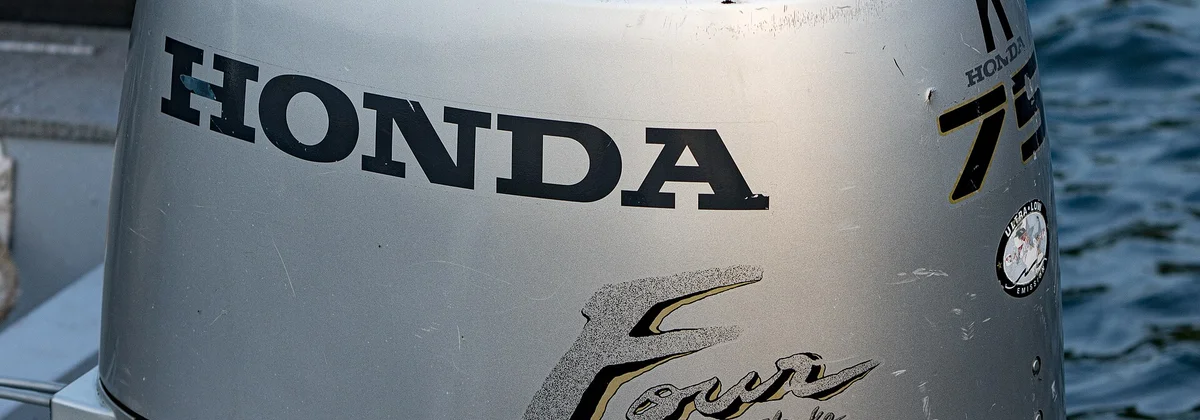
Quick answer: For most recreational boats under about 40 feet, a modern outboard is the cheaper and simpler ownership proposition over a decade: service access is unrestricted, the unit tilts clear of the water, and replacement is a bolt-off job. Straight inboards, particularly diesel, win on longevity and fuel over high annual hours in heavier boats. The sterndrive sits between them and carries the worst resale profile of the three once hours and leg age accumulate.
Three Layouts, Not Two
The query is usually framed as outboard against inboard, and there are really three answers, because the sterndrive behaves like neither of the others.
| Outboard | Sterndrive | Straight inboard | |
|---|---|---|---|
| Engine location | On the transom, outside | Inside the hull, drive on transom | Inside the hull |
| Drive | Integral leg and propeller | Steerable leg through the transom | Fixed shaft, rudder steering |
| Steering | The whole unit pivots | The leg pivots | Rudder behind a fixed propeller |
| Service access | Unrestricted, all round | Engine bay plus transom assembly | Engine bay, often tight |
| Out of water when idle | Yes, tilts clear | No, leg stays immersed | Shaft and propeller stay immersed |
| Cockpit space | Best, engine is outboard of it | Engine box or under-deck intrusion | Engine under the sole or in a room |
| Typical length band | Up to roughly 45 feet | Roughly 20 to 35 feet | Roughly 30 feet upward |
| Fuel type | Mostly petrol, some diesel | Mostly petrol | Petrol or diesel, diesel above 40 feet |
Each layout is a different maintenance contract as much as a different mechanical arrangement, and that is the part that decides ten-year cost.
What Each Costs to Keep
Service intervals and access, rather than the engine itself, drive the difference.
| Ownership factor | Outboard | Sterndrive | Straight inboard |
|---|---|---|---|
| Routine service access | Easy, cowling off | Moderate, engine bay | Often difficult |
| Winterisation complexity | Low | Moderate to high | Moderate |
| Corrosion exposure in salt | Low, tilts and flushes | High, leg and bellows immersed | Moderate, shaft and anodes |
| Wear items unique to the type | Impeller, gearcase oil | Bellows, gimbal bearing, leg service | Cutless bearing, stuffing box, shaft seal |
| Typical major-service trigger | Hours and impeller schedule | Bellows and leg service intervals | Injector, cooling and heat exchanger work |
| Replacement complexity | Bolt off, bolt on | Engine plus transom plus leg | Yard project, sometimes cutting access |
| Ease of DIY | High | Moderate | Low |
The sterndrive’s bellows and gimbal service is the item that surprises buyers. It is not optional, it is time-based as well as hours-based, and neglecting it is a route to water in the bilge. On a boat where the previous owner deferred it, the cost lands on the new owner.
Insider tip: on any sterndrive boat, ask for the date of the last bellows and gimbal bearing service in writing, not the hours. It is a calendar item as much as an hours item, and a boat with 200 hours and eight years since the last service is a bigger liability than one with 600 hours and a service last spring.
Fuel and Running Cost
Fuel type matters more than layout on annual cost, and it correlates with layout rather than being determined by it.
| Use pattern | Cheapest realistic setup | Why |
|---|---|---|
| Under 100 hours a year, under 30 feet | Petrol outboard | Low fixed maintenance, simple winterisation |
| 100 to 200 hours a year, 30 to 40 feet | Outboard or diesel inboard | Depends on hull type and cruising speed |
| Over 200 hours a year | Diesel inboard | Fuel efficiency and engine life dominate |
| Displacement cruising, long range | Diesel inboard | Efficiency at low speed, range, longevity |
| Occasional use, trailered | Petrol outboard | Flush, tilt, store, minimal standing cost |
| High-speed planing, day use | Outboard | Power to weight, simple service |
The fuel arithmetic itself is covered in the fuel cost page, and the annual totals sit on the maintenance cost guide. The point here is that a diesel inboard’s efficiency advantage only pays back the extra purchase and maintenance cost if the hours are there. A displacement trawler run 300 hours a year is a clear case. A weekend boat run 60 hours a year is not.
Choosing between two boats with different engines?
Send us both, with hours and service history. We will model ten-year running cost side by side so the comparison is on the real number.
Resale: The Part Buyers Underweight
This is where the three layouts separate most sharply, and it is the part that is invisible at purchase.
An outboard boat sells relatively easily. The buyer can see the engines, read the hours off the display, verify the service history against a dealer network, and price a repower with a phone call. Uncertainty is low, so the discount for uncertainty is low.
A sterndrive boat with meaningful hours is the hardest of the three to move. The buyer is inheriting a leg, bellows and transom assembly whose condition is not visible without a haul-out, and whose replacement can approach the value of an older boat. Sellers routinely discover this at listing time.
A straight inboard boat, particularly diesel, holds up well in the length bands where it belongs, because the buyers in that market expect the layout and value engine longevity. It sells poorly when it appears on a boat too small for it.
| Outboard | Sterndrive | Straight inboard | |
|---|---|---|---|
| Buyer pool | Largest | Narrower with age | Segment-specific but committed |
| Condition visible at viewing | Mostly | Poorly, needs haul-out | Partly, engine bay inspection |
| Cost of the worst-case repair | Engine replacement, known | Engine plus transom plus leg | Yard project, wide range |
| Effect of high hours on price | Moderate | Severe | Moderate on diesel |
| Ease of repower for the next owner | Simple | Complex and costly | Yard project |
What the Survey Should Look At
Whichever layout, the pre-purchase inspection differs, and a general survey may not cover the engines at all. Engine surveys are usually a separate specialist appointment, which the pre-purchase survey guide sets out.
- Outboard: compression or diagnostic scan, hours from the engine computer rather than the gauge, gearcase oil condition, corrosion at the mounting bracket, steering and trim function.
- Sterndrive: bellows condition and service date, gimbal bearing, transom assembly corrosion, leg oil for water intrusion, anodes, alignment.
- Inboard: oil analysis, cooling system and heat exchanger condition, exhaust risers, shaft alignment, cutless bearing, stuffing box or seal, engine mounts.
Insider tip: ask for the engine hours from the engine control unit, not from the dash gauge, on any boat where the electronics allow it. Gauges get replaced, hours get reset, and the engine’s own record is the one a dealer will read when you come to sell.
Buyer Scenarios
First boat, 18 to 26 feet, coastal or lake. Outboard, and the decision is barely a decision. The centre console type page covers the hulls this usually means. Service is simple, corrosion exposure is low, and the resale market is deepest here.
Family cruiser, 26 to 35 feet, mixed use. The real fork. An outboard-powered version of the same hull will usually cost less to keep and sell more easily than the sterndrive version. If you are looking at a sterndrive, price the bellows and leg service before you offer.
Trawler or displacement cruiser, 34 feet upward. Diesel inboard, and the layout is part of what you are buying. Focus the survey on cooling, exhaust and alignment rather than on the layout question.
High-hours user, over 200 hours a year. Diesel inboard earns its complexity here. Below that threshold, the fuel saving rarely repays the extra purchase and maintenance cost.
Saltwater, boat left in the water. Outboards have a genuine advantage because they tilt clear. If the boat must be a sterndrive, budget for a stricter anode and bellows regime and read the maintenance schedule before you commit.
Pros and cons of choosing outboard power
| Advantages | Disadvantages |
|---|---|
| Unrestricted service access and easy DIY maintenance | Engines are visible on the transom, which some buyers dislike |
| Tilts clear of the water, a real advantage in salt | Petrol fuel cost is higher than diesel over high hours |
| Repower is a bolt-off job rather than a yard project | Multiple engines multiply the routine service bill |
| Frees cockpit and interior volume inside the hull | Less suited to heavy displacement hulls above 45 feet |
| Largest resale buyer pool and easiest history to verify | Noise and weight sit at the stern, which affects trim |
Not sure which layout suits how you will use the boat?
Tell us the water, the hours you expect and the length band. We will tell you which layout to shortlist and what to check on each.
Frequently Asked Questions
An outboard hangs on the transom as a single self-contained unit with engine, gearbox and propeller. A sterndrive, also called an inboard-outboard, puts the engine inside the hull and drives through a steerable leg on the transom. A straight inboard puts the engine inside the hull and drives a fixed shaft and propeller under it, steered by a rudder. Three layouts, three service realities.
For most recreational boats under about 40 feet, modern outboards are cheaper across a decade of ownership, because routine service is simpler, access is unrestricted and replacement is a bolt-off job rather than a yard project. Straight inboards win on longevity in heavy displacement use, and diesel inboards win decisively on fuel over high annual hours.
Outboard-powered boats have generally held value well because the buyer pool is larger, service history is easy to verify and repowering is straightforward. A sterndrive boat with high hours and an ageing leg tends to be the hardest of the three to sell, because the buyer is inheriting a known maintenance liability that is expensive to put right.
Life is a function of hours, use and maintenance rather than layout, but the patterns differ. Petrol outboards and sterndrives are commonly considered to be approaching a major decision point in the region of 1,500 to 2,000 hours, while a well-maintained marine diesel inboard can run several times that. A boat used 50 hours a year takes decades to reach either.
Outboards have a real advantage in salt, because they tilt clear of the water when not in use and the whole unit can be flushed easily. Sterndrives sit permanently immersed at the transom with bellows, gimbal bearings and anodes that all need attention in salt. Straight inboards keep the engine dry inside the hull, with only the shaft, propeller and anodes exposed.
Repowering an outboard is the cheapest and quickest of the three: it is largely a matter of the engine price plus rigging and controls. A sterndrive repower involves engine, transom assembly and drive leg together, which is why it so often exceeds the boat's value on an older hull. An inboard repower is a yard project, sometimes involving cutting access, and is priced accordingly.
Yes, on a well-maintained boat with documented bellows and leg service, where the layout gives you the cockpit and hull form you want at a price an equivalent outboard boat would not match. Buy the service history rather than the hours, budget the next leg service as a known cost, and go in understanding that the resale market will be narrower than for an outboard equivalent.
Request a yacht buyer consultation
Share your budget, target LOA, and use case. We reply within one business day with matched brokers or surveyors.