Yacht types
Choosing the type is the decision that constrains every later one: range, draft, crew requirement, berth cost and resale market all follow from it. These guides cover what each type is genuinely good at.
Buyers usually arrive with a length in mind and a type only half-decided, which is the wrong way round. A 60ft flybridge, a 60ft catamaran and a 60ft explorer are three completely different ownership propositions in fuel burn, berth cost, crew requirement and where they can actually go.
The honest constraints tend to be unglamorous. Beam decides what a marina charges and whether a slip exists. Draft decides whether the Bahamas are open to you. Range and stabilisation decide whether long passages are pleasant or endured. Each guide leads with those before it gets to layout.
If you are early in the process, read across two or three types rather than deep into one. The comparison pages are usually more useful than a single-type guide at this stage.
Want this narrowed down to your yacht?
Send a short brief and we will come back with the guides that apply and the specialists who can quote.
Motor yachts
The mainstream categories, from express cruisers to tri-deck.
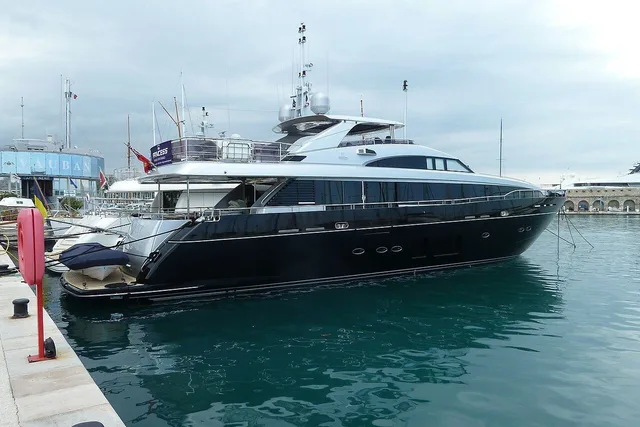
Motor Yachts: Types, Costs and Buyer Guide 2026
Motor yacht buyer guide: express, flybridge, displacement and explorer types, price ranges, ownership costs, top brands, and survey checks.
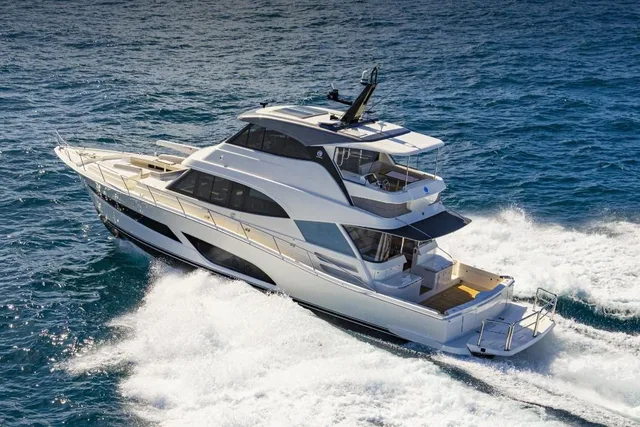
Flybridge Yachts: Buyer Guide, Brands and Costs 2026
Flybridge yachts guide: layouts, size bands, prices, brands, running costs, survey risks, and buyer checklist for 40-90ft models.
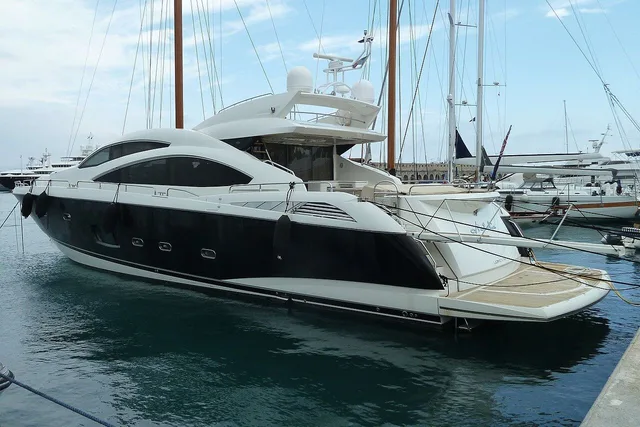
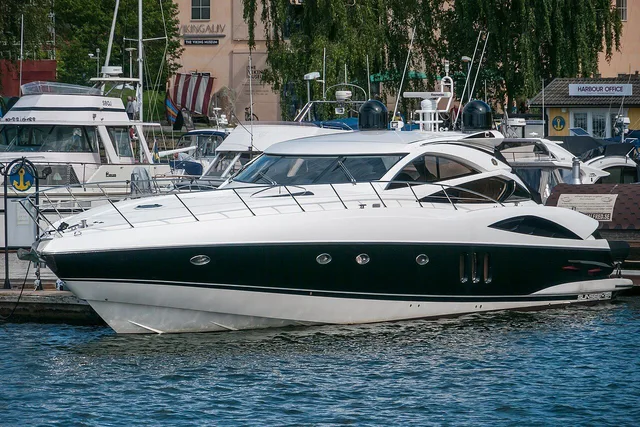
Express Cruisers: Speed, Costs and Buyer Guide 2026
Express cruisers guide: planing hulls, sportscruiser vs flybridge tradeoffs, fuel burn, brands, prices, used market, and survey checks.
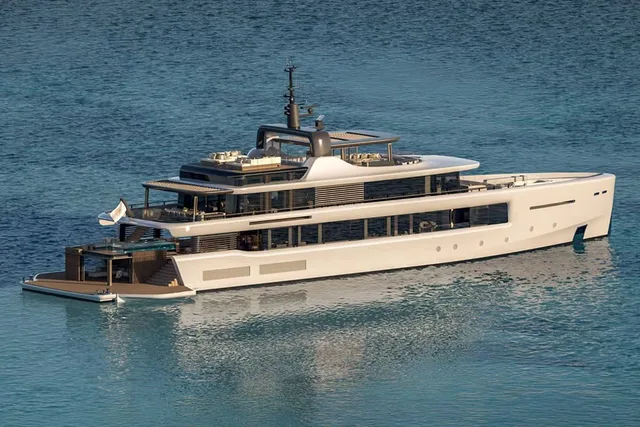
Tri-Deck Yachts: Layout, Costs and Buyer Guide 2026
Tri-deck yacht guide: production 75-88ft at $3.5M-$7M, semi-custom $7M-$15M, 30-40m superyachts $12M-$35M. Layouts, crew needs, pre-buy survey checks.
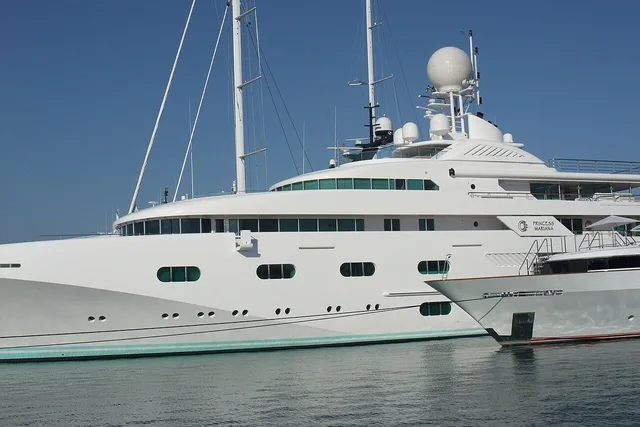
Mega Yachts: Costs, Crew, Builders and Buyer Guide
Mega yachts guide: 40-60m luxury motor yachts, purchase prices, crew, builders, charter income, running costs and survey checks.
Sail and multihull
Lower running costs, different handling, different resale market.
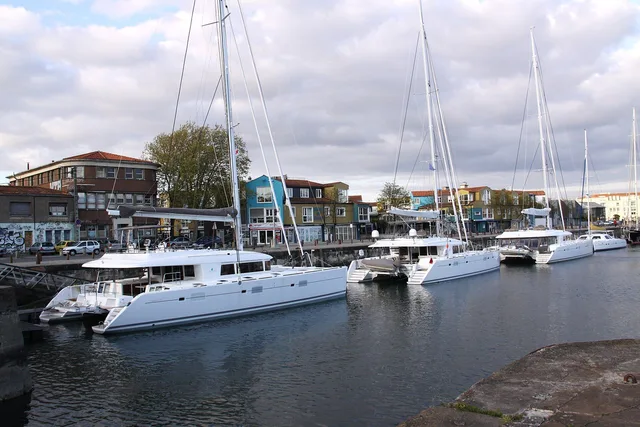
Long range and expedition
Built for passage-making rather than for the marina.
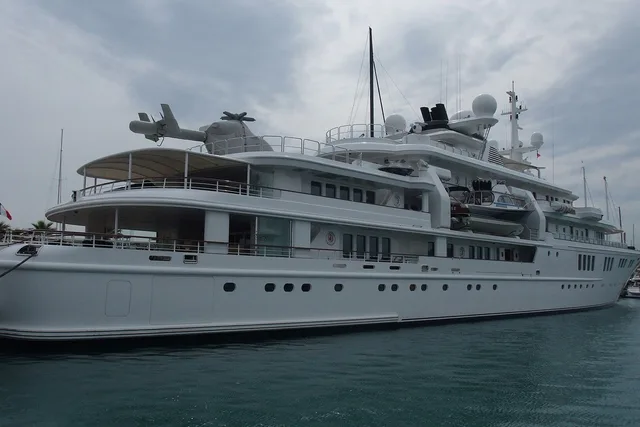
Purpose built
Types chosen for one specific use case.
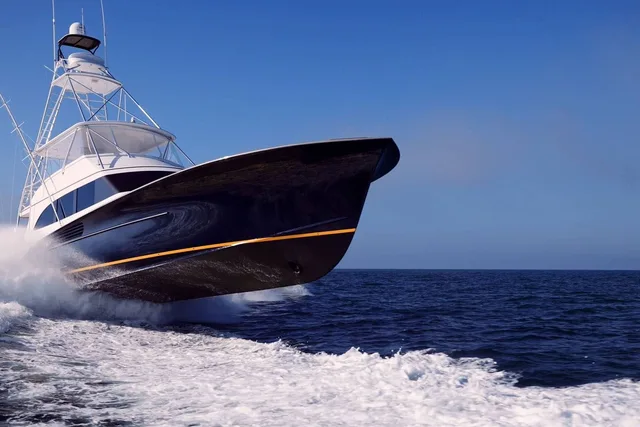
Sportfishing Yachts: Buyer's Guide, Costs & Top Builders
Sportfishing yachts, 45-90 ft tournament fishing platforms starting at $400,000 used. Viking, Hatteras, Jarrett Bay: costs, cockpit specs, and buying guide.
Liveaboard Boats: What Works for Living Aboard Full Time
Which boats actually work as a full-time home: layout, systems, tankage and heating, plus the marina rules that decide where you can do it.
Continue your research
Common questions
A flybridge yacht is a motor yacht with an upper helm and living deck above the main saloon. The flybridge adds outdoor space and visibility but raises the centre of gravity, air draft and usually the berth cost. Most production motor yachts between 45ft and 80ft are flybridge configurations.
Not straightforwardly. Catamarans usually burn less fuel and have shallower draft, but marinas commonly charge a beam surcharge of 30% to 50%, and in tight ports a slip may not exist at any price. On the other side, catamarans have held resale value strongly in the charter-suitable size bands.
Displacement explorer and expedition yachts, and long-range trawlers below them, because they are designed around fuel capacity, tankage and sea-keeping rather than speed. A semi-displacement flybridge will make the same passage but with far higher fuel burn and less comfort in a seaway.
As a rough line, owner-operation is realistic to about 60ft to 70ft depending on experience and systems complexity. Above that, most owners carry at least a captain, and from roughly 80ft a captain plus one or two crew becomes standard. Crew is usually the point where the annual budget changes character.
Not sure which type fits?
Tell us where you plan to cruise, how many nights aboard per year and your budget band. We will come back with the types that actually fit and the ones that do not.