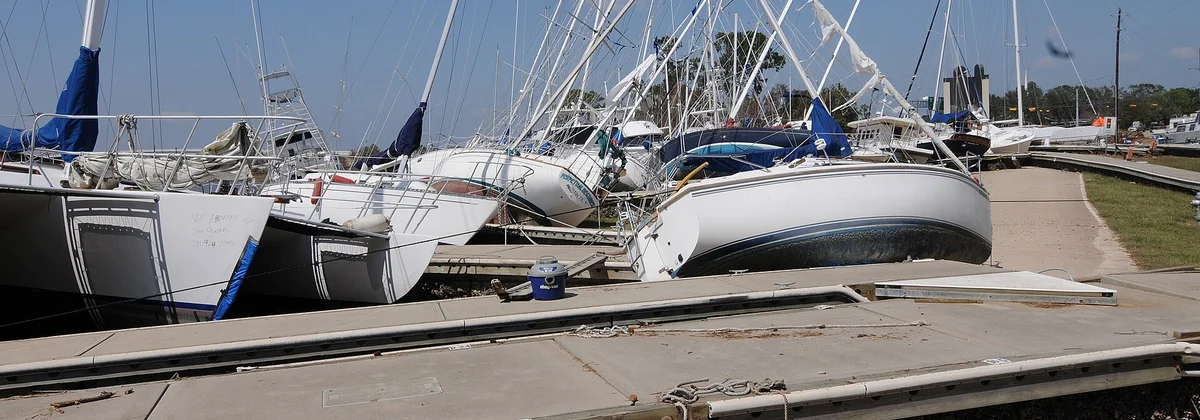
Quick answer: As a planning band, boat insurance runs about 1% to 1.5% of insured hull value a year for a well-found boat in low-risk water, and 2% to 5% in a named-storm zone or on an older hull. The variable that moves the number most is not the boat, it is where you keep it. The same $150,000 cruiser can be quoted near $1,500 on the Great Lakes and above $5,000 in South Florida, and nothing about the boat changed. These are planning figures for September 2026, not quotes.
How Much Does Boat Insurance Cost per Year?
Insurers do not price boats from a table, but the market clusters tightly enough that a percentage of insured value is a usable planning tool. The bands below are directional for September 2026 and assume agreed-value hull cover with normal liability limits, a clean record and a boat in sound survey condition.
| Insured hull value | Low-risk inland or northern | Coastal, outside storm zone | Named-storm zone |
|---|---|---|---|
| $50,000 | $500-$800/year | $700-$1,200/year | $1,200-$2,500/year |
| $100,000 | $900-$1,500/year | $1,300-$2,200/year | $2,200-$4,500/year |
| $150,000 | $1,300-$2,200/year | $1,900-$3,200/year | $3,000-$7,500/year |
| $250,000 | $2,100-$3,600/year | $3,100-$5,300/year | $5,000-$12,000/year |
| $500,000 | $4,000-$7,000/year | $6,000-$10,500/year | $10,000-$24,000/year |
| $1,000,000 | $8,000-$14,000/year | $12,000-$21,000/year | $20,000-$48,000/year |
Read those columns as three different insurance markets rather than three price levels. The named-storm column is not a surcharge on the same policy; it is a policy with different exclusions, a different deductible structure and, often, a mandatory lay-up or storm-plan condition attached.
Insider tip: ask every quote for the total cost of a moderate claim, not the annual premium. Take a $40,000 storm-damage scenario and ask what you would actually receive after the named-storm deductible. Two quotes that look $600 apart on premium can be $30,000 apart on that answer, and the cheaper one is usually the one you would regret.
What Drives the Premium?
In roughly the order insurers weight them.
| Factor | Effect on premium | Why |
|---|---|---|
| Cruising and mooring location | Very large | Storm exposure and theft risk dominate the model |
| Insured hull value | Large, roughly linear | It is the number the payout is measured against |
| Vessel age and construction | Large above 15 to 20 years | Older systems, wiring and tanks drive claims |
| Operator experience and licensing | Moderate | Documented courses and time aboard reduce risk |
| Claims history | Moderate to large | Two claims in five years changes the market you can access |
| Hull material and design | Moderate | High-performance and unusual construction price differently |
| Storage type in the off season | Moderate | Covered, ashore and inland all reduce exposure |
| Deductible chosen | Direct, controllable | The one lever entirely in your hands |
| Navigation limits agreed | Moderate | A tighter cruising area is a cheaper policy |
Location is worth dwelling on because buyers consistently underestimate it. Insurers draw windstorm boxes on maps, and the line is not a state boundary. Crossing from one side of a county to the other can change the deductible structure, the lay-up requirement and whether a carrier will write the risk at all.
Why Is Florida So Much More Expensive?
Florida is the clearest example of location pricing and it is worth understanding even if you are buying elsewhere, because the same logic applies to any exposed coast.
A boat kept in South Florida sits inside a named-storm zone for roughly half the year. That produces three separate cost effects, and only the first is a higher premium.
| Florida effect | What it means in practice |
|---|---|
| Higher base premium | Often 2 to 3 times an inland quote on the same hull value |
| Named-storm deductible | Commonly 5% to 15% of insured value, separate from the standard deductible |
| Lay-up or storm plan requirement | The policy may require a written plan and a specific haul-out or location |
| Reduced carrier appetite | Fewer insurers write the risk, so less competition on price |
| Survey requirements | More frequent condition surveys on older hulls |
The lay-up requirement is the one that surprises people. A policy can oblige you to move the boat, haul it, or secure it in a named way when a storm is forecast, and failing to do so can affect the claim. Read the hurricane zone insurance page and the named storm deductible guide before you sign, and read the Florida-specific page if the boat will live there.
Pricing a boat you have not bought yet?
Send us the length, hull value, where it will be kept and how it will be used. We will map the insurance and berth exposure alongside the purchase price.
Do You Actually Need Boat Insurance?
Legally, in most US states, no. Practically, almost always yes, and the obligation usually comes from somewhere other than the state.
| Who requires it | What they require | When |
|---|---|---|
| Marina or yacht club | Liability cover, often $300,000 to $1,000,000, marina named as additional insured | Before you are given a slip |
| Lender | Agreed-value hull cover, lender as loss payee | Before closing funds are released |
| Haul-out yard | Liability and proof of cover | Before they lift the boat |
| Some state waters | Liability for certain vessel classes or commercial use | Varies; check the state agency |
| Charter operation | Commercial cover, different policy entirely | Before any paid charter |
If you are financing the purchase, the sequence matters: lenders want the insurance in place before they release funds, and insurers want a current survey before they quote an older hull. That chain adds days to a closing and it is one of the most common causes of a missed closing date. The closing costs page sets out where it sits in the timeline.
Agreed Value or Actual Cash Value?
This is the single most consequential line in a boat policy and it is routinely skimmed.
| Agreed value | Actual cash value | |
|---|---|---|
| Total loss payout | The sum stated in the policy | Depreciated market value at the time of loss |
| Depreciation applied | No | Yes, and it compounds with age |
| Premium | Higher | Lower |
| Lender acceptance | Standard requirement | Often refused |
| Typical use | Boats an owner intends to replace | Older, lower-value hulls |
| Risk to you | Over-insuring and paying for it | Discovering the gap after the loss |
On a ten-year-old boat the gap between the two can be tens of thousands of dollars, and it only becomes visible at the worst possible moment. If a quote is meaningfully cheaper than its competitors, check this line first, then check the named-storm deductible second. Those two together explain most price differences that look otherwise inexplicable.
What Does the Policy Not Cover?
Standard exclusions repeat across carriers and it is worth knowing them before you rely on the cover.
- Wear, tear, gradual deterioration and osmosis, which are maintenance rather than accidents.
- Manufacturer defects, which belong to the warranty.
- Damage arising from failure to maintain, where a surveyor’s recommendation was ignored.
- Loss while operating outside the agreed navigation limits.
- Named-storm damage below the storm deductible, which is the large one.
- Racing damage, unless specifically endorsed.
- Marine life, corrosion and electrolysis in many policies.
Insider tip: if a previous survey recommended work and you did not do it, tell your insurer. An open recommendation on a survey the insurer already holds is a documented known defect, and a claim connected to it is the easiest claim in the industry to decline. Either complete the work or get written confirmation that the carrier accepts the risk.
How to Reduce the Premium Honestly
These are the levers that actually move a quote, in rough order of effect.
| Action | Typical effect | Notes |
|---|---|---|
| Change where the boat winters | Very large | The biggest single lever in an exposed area |
| Raise the standard deductible | Moderate to large | Fully in your control, do the arithmetic first |
| Complete a recognised safety course | Small to moderate | Many carriers discount for it, keep the certificate |
| Provide a current condition survey | Moderate on older hulls | Often required above 15 to 20 years anyway |
| Install and document fire and bilge alarms | Small to moderate | Documentation matters as much as installation |
| Agree tighter navigation limits | Moderate | Only if the limits genuinely match your use |
| Bundle with other policies | Small | Real but usually smaller than owners expect |
| Keep a clean claims record | Large over time | Two claims in five years narrows the market sharply |
What does not work is under-insuring the hull to lower the premium. It reduces the payout on a total loss, it can trigger co-insurance provisions on a partial loss, and lenders will not accept it. Use the insurance cost calculator to test the deductible arithmetic before you choose.
Buyer Scenarios for Insurance Cost
First boat, $40,000 to $80,000, inland lake. Expect the low column. This is the simplest market in boat insurance and the premium will be a small line against dockage. Take the safety course before you quote; it is worth more here proportionally than anywhere else.
Coastal cruiser, $150,000 to $300,000, Northeast. Seasonal use with winter lay-up ashore is a favourable profile. Get the lay-up dates in the policy and make sure they match your actual haul-out, which is a common mismatch.
South Florida motor yacht, $500,000 plus. Insurance is a major budget line, not a footnote. Model the named-storm deductible in dollars before you buy, and price a summer relocation out of the box against the premium saving. Read the hurricane zone page first.
Older hull, 20 years plus, any location. A current survey is the price of entry, and open recommendations will follow you from carrier to carrier. Budget for the survey and for closing out its findings before you expect a competitive quote.
Liveaboard. Full-time occupancy changes the risk profile and not every carrier writes it. Declare it. An undeclared liveaboard is a coverage problem waiting for a claim.
Pros and cons of insuring at higher agreed value
| Advantages | Disadvantages |
|---|---|
| Total loss pays the stated sum with no depreciation argument | Premium is higher every year, whether or not you claim |
| Lenders accept it, so it does not block financing | Over-stating value wastes premium without raising the payout ceiling |
| Removes the worst dispute from the worst day | Requires a current survey to justify the figure on older hulls |
| Makes the annual cost predictable as a percentage | Does not protect against the named-storm deductible, which is separate |
| Simplifies replacing the boat after a loss | Encourages under-attention to the exclusions that actually bite |
Working out what a boat really costs to keep?
Insurance is one line of several. We can model insurance, berth, maintenance and finance together against a specific boat and location.
Frequently Asked Questions
As a planning band, roughly 1% to 1.5% of the insured hull value a year for a well-found boat in a low-risk area, rising to 2% to 5% in a named-storm zone or on an older hull. A $150,000 cruiser might sit near $1,500 to $2,500 in the Great Lakes and $3,000 to $7,500 in South Florida. Those are planning figures for September 2026, not quotes; a real number needs the vessel, the operator and the cruising area.
Location first, then hull value, then vessel age and construction, then the operator's experience and claims history. Location dominates because it decides storm exposure, and a named-storm zone can double or triple the same boat's premium against inland water. Two identical boats in different counties are routinely quoted very differently for that reason alone.
Rarely by state law, almost always in practice. Most states do not mandate it for private recreational boats, but marinas require proof of liability cover before they will give you a slip, and any lender financing the boat will require hull cover with itself named as loss payee. If you keep the boat anywhere other than your own land and you financed it, you will carry insurance.
Agreed value pays the sum written in the policy if the boat is a total loss, with no depreciation applied. Actual cash value pays the depreciated market value at the time of loss, which on a ten-year-old boat can be far less than you insured it for. Agreed value costs more and is what most lenders and most careful owners want.
A separate, much larger deductible that applies only when the damage comes from a storm the meteorological service has named. It is usually expressed as a percentage of the insured value rather than a flat sum, commonly in the 5% to 15% range in exposed areas, which on a $300,000 boat is $15,000 to $45,000 out of your pocket before the policy responds.
Raise the standard deductible, complete a recognised boating safety course, install and document approved fire and bilge alarms, keep a clean claims record, provide a current survey, and above all reconsider where the boat winters. Moving out of a windstorm box for hurricane season is the single largest lever most owners have, and it is the one insurers price most directly.
Look at three lines before you look at the premium: agreed value against actual cash value, the named-storm deductible as a percentage of insured value, and the navigation limits. A quote that is 20% cheaper almost always differs on one of those, and the difference shows up as tens of thousands of dollars on a claim rather than hundreds on a premium.
Request a yacht buyer consultation
Share your budget, target LOA, and use case. We reply within one business day with matched brokers or surveyors.