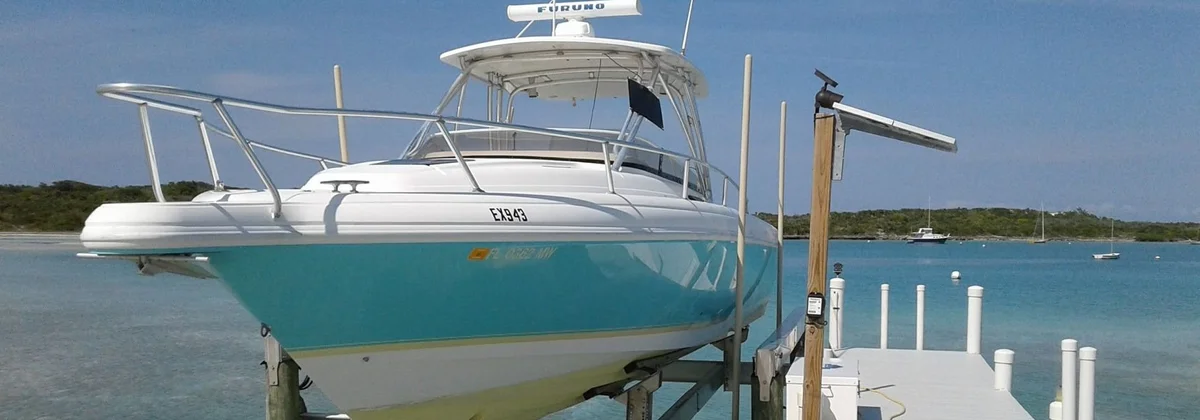
Quick answer: A boat lift is priced by capacity, lift type and site, and the installed cost is routinely close to double the hardware price once pilings, electrical supply and access are included. Planning bands for September 2026: a few thousand dollars for a small cantilever unit under 5,000 lb, a mid five-figure installed cost for a four-post lift carrying a 20 to 30 foot boat, and well beyond that for heavy elevator and hydraulic systems. The permit position, not the hardware, is usually what sets the timeline.
What a Boat Lift Costs by Capacity
Every ranking page on this subject is an installer quoting its own product in one lake or one stretch of coast, which is why a national picture is hard to find. The bands below are directional planning figures for September 2026 and cover the hardware only.
| Rated capacity | Typical boat | Common lift type | Hardware band |
|---|---|---|---|
| Up to 3,000 lb | Small runabout, jet boat, PWC | Cantilever or vertical | $2,500-$6,000 |
| 3,000 to 6,000 lb | 18 to 22 ft runabout, centre console | Vertical or four-post | $5,000-$11,000 |
| 6,000 to 12,000 lb | 22 to 28 ft cruiser, pontoon | Four-post | $9,000-$20,000 |
| 12,000 to 20,000 lb | 28 to 34 ft cruiser | Four-post or elevator | $16,000-$35,000 |
| 20,000 to 40,000 lb | 34 to 45 ft boat | Elevator or hydraulic | $30,000-$70,000 |
| Above 40,000 lb | Larger yachts | Hydraulic, engineered | Quoted per project |
Read those as the starting figure rather than the answer. The installed cost is the number that matters, and it is a different number.
What Installation Actually Adds
| Installation item | What it involves | Effect on total |
|---|---|---|
| Pilings or mounting structure | Driving piles, or fixing to an existing dock | Often the single largest addition |
| Electrical supply | Circuit to the motor, weatherproof control | Material where no supply exists |
| Freight | Lifts are large and heavy to ship | Significant on remote sites |
| Crane or barge access | Where the site cannot be reached by land | Adds substantially |
| Dock modification | Widening, strengthening, reconfiguring | Site-specific |
| Permitting and drawings | Applications, sometimes engineered drawings | Time as much as money |
| Remote or canopy options | Convenience and sun protection | Optional, priced separately |
As a working assumption, budget the installed cost at roughly 1.5 to 2 times the hardware price on a straightforward site, and more where pilings are needed or access is difficult. Get the quote written as a single installed figure with the components itemised, because a hardware quote and an installation quote from two parties is how projects run over.
Insider tip: ask the installer what happens if the piles cannot be driven to the planned depth. Bottom conditions vary within a single property, refusal on rock or unexpected soft ground is common, and the contract wording on that eventuality decides who pays for the redesign. It is the single most common cost overrun on lift installation.
Which Lift Type Suits Which Site
| Lift type | Suits | Avoid where |
|---|---|---|
| Cantilever | Shallow, sheltered fresh water, small boats | Deep water, wave action, heavy boats |
| Vertical | Sheltered water, moderate depth | Large tidal range |
| Four-post | Most protected sites, the common default | Very deep water, extreme tide |
| Elevator | Deeper water, limited overhead space | Sites where piling is impractical |
| Hydraulic | Heavy boats, exposed sites | Budget-constrained projects |
| Floating | Large tidal range, soft bottoms | Sites with strong current or debris |
| Davits | Tenders and small craft on a seawall | Anything beyond light weight |
Water type changes the specification rather than the choice. In salt, everything corrodes faster: motors, cables, fasteners, bunk hardware and the structure itself. A freshwater specification installed in salt is a false economy that shows up in 3 to 5 years rather than 15.
Sizing Capacity Properly
Undersizing is the expensive mistake because it cannot be fixed without replacing the lift.
| Weight component | Commonly forgotten |
|---|---|
| Dry weight from the manufacturer | The published figure is a stripped boat |
| Full fuel | Often several hundred to over a thousand pounds |
| Full water and holding tanks | Adds up on a cruiser |
| Batteries and electronics | Especially on boats with large battery banks |
| Hardtop, tower or arch | Substantial on sportfish and centre consoles |
| Tender, gear, safety equipment | Cumulative and permanent |
| Growth allowance for a future boat | The lift outlasts the boat |
The last row matters. A lift installed today commonly outlives the boat on it, so sizing for the current boat exactly means buying a new lift when you upgrade. Buying one capacity step up is usually cheaper than replacing the lift in 5 years.
Deciding between a lift and a slip?
Tell us the boat, the site and what a local slip costs. We will set the installed lift price against the rent and the maintenance saving.
Does a Lift Pay Back Against Slip Rent?
On owned waterfront, often yes. On rented waterfront, almost never.
The comparison has three parts. The first is the slip rent avoided, which the slip and dockage cost guide sets out by length and region. The second is the maintenance saving from keeping the hull out of the water: less bottom growth, less frequent antifouling, less corrosion exposure and no in-water diver service. The third is the residual value of the lift itself, which is real on owned property and zero on rented.
| Factor | Owned waterfront | Rented dock or slip |
|---|---|---|
| Slip rent avoided | Yes, every year | No, you still rent the space |
| Bottom maintenance saved | Yes | Yes |
| Lift adds property value | Often | No |
| Lift is recoverable if you move | Partly, if removable | Usually not |
| Permit effort | Yours, and worth it | Yours, benefiting the landlord |
| Sensible decision | Frequently yes | Rarely |
Insider tip: count the antifouling cycle in the payback, not just the rent. A boat kept on a lift in warm water can go from an annual haul-and-antifoul cycle to a much longer one, and on a mid-sized boat that is a meaningful recurring saving that owners routinely leave out of the comparison. The haul-out cost page covers what that cycle costs.
Running Cost and Life
A lift is not a one-off purchase; it is a piece of machinery in a hostile environment.
| Item | Interval | Note |
|---|---|---|
| Cable inspection and replacement | Inspect annually, replace on wear | The critical safety item |
| Motor and gearbox service | Annual | More often in salt |
| Anodes, where fitted | Annual check | Salt water especially |
| Bunk carpet and adjustment | As needed | Wrong bunk position damages hulls |
| Structural inspection | Annual to biennial | Pilings, welds, fasteners |
| Canopy replacement | 5 to 10 years | Sun and wind driven |
| Full lift life | 15 to 25 years in fresh, less in salt | Specification dependent |
Set the whole thing against the rest of the annual budget in the ownership cost guide. Insurance is worth a conversation too: some policies treat a boat on a lift differently from one in the water, particularly in storm-exposed regions, and it can cut both ways. Raise it with your insurer rather than assuming, and see the boat insurance cost page for how location and storage type move a premium.
Buyer Scenarios
Owned lakefront, 20 to 24 foot runabout. A four-post lift is the standard answer, and the maintenance schedule covers what a lift saves you from doing in the water. Size one capacity step above the loaded weight, and budget installed rather than hardware.
Owned saltwater dock, 28 to 34 foot cruiser. Specify for corrosion throughout and expect a shorter service life than a freshwater equivalent. The bottom-maintenance saving is largest here and does most of the payback work.
Large tidal range site. Floating or elevator systems rather than a fixed four-post. Get a site survey before you take any quote seriously.
Rented dock. Usually the wrong purchase. Price a slip instead, and revisit if you buy the property.
Storm-exposed region. Talk to the insurer before you order. A lift can be an advantage or a complication depending on the policy, and it is cheaper to find out first.
Pros and cons of installing a boat lift
| Advantages | Disadvantages |
|---|---|
| Removes recurring slip rent on owned waterfront | Installed cost is commonly 1.5 to 2 times the hardware price |
| Hull out of the water cuts growth, antifouling and corrosion | Permits can take longer than the hardware lead time |
| Faster launch and recovery than a trailer or ramp | Machinery in a marine environment needs annual servicing |
| Often adds value to a waterfront property | Undersizing capacity cannot be fixed without replacement |
| Reduces storm surge exposure at some sites, if rated for it | On rented waterfront the money improves someone else’s dock |
Buying a boat for a private dock?
We can size the lift against the boat you are actually buying and set the installed cost against the slip you would otherwise rent.
Frequently Asked Questions
As a planning band for September 2026, a small cantilever or vertical lift for a boat under 5,000 lb commonly runs a few thousand dollars for the unit, a mid-range four-post lift for a 20 to 30 foot boat sits in the region of five figures installed, and a heavy elevator or hydraulic lift for larger boats runs well beyond that. Capacity, water type and site access drive the number more than brand does.
Often as much again as the lift itself, and sometimes more. Installation covers pilings or a mounting structure, electrical supply to the motor, freight, crane or barge access if the site is awkward, and any dock modification. A quote for the lift alone is not a quote for a working lift, and the gap between the two is where most budgeting surprises live.
Cantilever and vertical lifts suit sheltered fresh water with modest depth variation. Four-post lifts suit most protected sites and are the common default. Elevator and hydraulic lifts suit deeper or more exposed water and heavier boats. Floating lifts suit sites with large tidal range or soft bottoms where driving pilings is impractical. Saltwater sites need corrosion-resistant specification everywhere.
Take the boat's dry weight, add fuel, water, batteries, gear and any hardtop or tower, then add a margin. The rated capacity should comfortably exceed the loaded weight rather than approach it, because rated capacity is not a target. Undersizing is the commonest and most expensive lift mistake, and it is unfixable without replacing the lift.
Frequently yes, and it depends on the waterway. Installing a lift usually means work in or over the water, which can involve local, state and sometimes federal permissions, plus any homeowners association or waterway authority rules. Establish the permit position before you order, because lead times on approvals can exceed lead times on hardware.
It can, on waterfront property where the alternative is renting a slip year after year. Set the installed cost against the annual slip rent you would otherwise pay, then add the value of the boat sitting out of the water, which reduces bottom growth, antifouling frequency and corrosion. On a rented site the arithmetic rarely works, because you are improving someone else's dock.
Commonly 15 to 25 years in fresh water with annual servicing, and less in salt, where motors, cables and fasteners corrode faster. Cables are the wear item to watch and should be inspected annually and replaced on wear rather than on a fixed schedule. A lift usually outlives the boat on it, which is an argument for sizing one capacity step above your current requirement.
Request a yacht buyer consultation
Share your budget, target LOA, and use case. We reply within one business day with matched brokers or surveyors.