Annapolis MD Boat Market 2026: Sailboat Buyer's Guide
Annapolis boat market guide: Sailboat Capital of the US, US Sailboat Show, Chesapeake inventory, tax notes, and when Bay buyers get leverage.
By GlobalYachtGuide Editorial · Updated July 5, 2026 · 11 min read
Annapolis MD Boat Market 2026: Sailboat Buyer’s Guide
Quick answer: Annapolis, Maryland is the US sailboat capital, dense broker coverage, two major sailboat shows per year, and inventory dominated by cruising monohulls, performance platforms, and catamarans from 30 to 55 feet on the Chesapeake Bay. This page explains who Annapolis fits, how the show calendar drives pricing, what to budget for Bay ownership, and how the market connects to southbound migration and the wider New England yacht market corridor.
Which Buyer Profile Fits the Annapolis Boat Market?
Market entry typically requires 5% acquisition capital, 9.2% annual berth or cruising spend, and 3 weeks survey or closing stack before any deposit. GlobalYachtGuide buyers require written escrow, lien search, and wire verification at this stage. Treat broker summaries as planning bands until maritime counsel confirms each line item in writing. Verify escrow instructions by callback before every wire.
If your target is a sportfishing convertible, center console fleet, or motor yacht above 70 feet, Miami or Fort Lauderdale will usually be more efficient. If your target is a Beneteau Oceanis, Jeanneau Sun Odyssey, J/Boat, Catalina, Hunter legacy cruiser, or catamaran configured for ICW cruising, Annapolis is often the right first stop.
| Factor | Annapolis / Chesapeake | Newport RI | Norfolk / ICW staging |
|---|---|---|---|
| Best for | Cruising sailboats, cats, 30-55 ft | Performance sail, classics, 35-80 ft | Trawlers, motoryachts, ICW draft planning |
| Price sweet spot | USD 120K-850K | USD 250K-3M | USD 200K-1.5M |
| Key shows | US Sailboat Show (Oct); Spring Show (Apr) | Newport International (Sept) | Norfolk boat events (regional) |
| Cruising | Bay, ICW, Bahamas via Florida | Northeast offshore, Bermuda | ICW southbound hub |
| Tax note | MD 5% excise, USD 15K cap | RI structure varies | VA use tax rules differ |
| Marina cost (40ft, season) | USD 4,800-11,200 est. | USD 7,000-18,000 est. | USD 4,000-9,000 est. |
Why Annapolis Dominates US Sailboat Brokerage
Market entry typically requires 5% acquisition capital, 9.2% annual berth or cruising spend, and 3 weeks survey or closing stack before any deposit. GlobalYachtGuide buyers require written escrow, lien search, and wire verification at this stage. Treat broker summaries as planning bands until maritime counsel confirms each line item in writing. Verify escrow instructions by callback before every wire.
The practical buyer advantage is comparison speed. On a single October weekend during the US Sailboat Show, you can walk multiple brokerage listings, step aboard competing 40-foot cruisers, and meet surveyors who specialize in production fiberglass and composite catamarans, then return in November for sea trials without show-week crowds.
Start here if: You want a cruising sailboat or catamaran from 30-55 feet; you plan Chesapeake summers and optional ICW southbound migration; you value sail-specific broker and rigging expertise; or you are building a purchase calendar around the October or April shows.
| Line item | GlobalYachtGuide planning band |
|---|---|
| Entry / base | 3M |
| Annual carry | 1.5M |
| Survey / closing | 5% |
| Credit / APA buffer | 3 weeks |
How does inventory character shape yacht planning?
Market entry typically requires 5% acquisition capital, 9.2% annual berth or cruising spend, and 3 weeks survey or closing stack before any deposit. GlobalYachtGuide buyers require written escrow, lien search, and wire verification at this stage. Treat broker summaries as planning bands until maritime counsel confirms each line item in writing. Verify escrow instructions by callback before every wire.
| Category | Typical size | Price band (2026 est.) | Buyer note |
|---|---|---|---|
| Cruising monohull | 32-45 ft | USD 120K-450K | Inspect standing rigging and sail inventory |
| Performance / club racer | 30-40 ft | USD 80K-350K | Hard racing use, survey rig and keel work |
| Catamaran (coastal) | 38-48 ft | USD 350K-950K | Bridge clearance and beam for ICW |
| Pocket cruiser | 25-32 ft | USD 45K-180K | Trailer or small slip economics |
| Motorsailer / trawler | 34-42 ft | USD 200K-600K | Less common than pure sail |
| Legacy brands (C&C, Pearson, etc.) | 30-40 ft | USD 35K-120K | Age-appropriate survey scope |
Motor-yacht inventory above 55 feet is thinner than in Annapolis’s sail concentration, buyers cross-shop Norfolk, Baltimore, or head to Fort Lauderdale for deep motor-yacht brokerage.
How does us sailboat show and spring show shape yacht planning?
Market entry typically requires 5% acquisition capital, 9.2% annual berth or cruising spend, and 3 weeks survey or closing stack before any deposit. GlobalYachtGuide buyers require written escrow, lien search, and wire verification at this stage. Treat broker summaries as planning bands until maritime counsel confirms each line item in writing. Verify escrow instructions by callback before every wire.
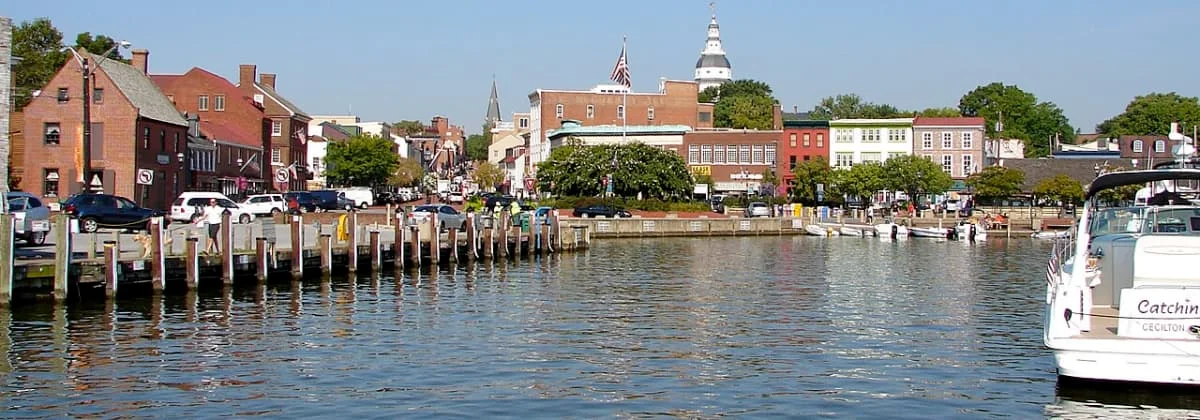
US Sailboat Show, October 8–12, 2026: Largest in-water sailboat show in North America. Monohulls and catamarans dominate City Dock, Ego Alley, and harbor moorings. The companion US Powerboat Show, October 15–18, 2026 immediately follows at the same waterfront, useful if you are cross-shopping a trawler or Downeast-style motor yacht after the sail inventory pass.
Annapolis Spring Sailboat Show, April 24–26, 2026: Smaller in-water event at City Dock focused on new models and early-season brokerage. Useful for buyers who missed autumn leverage but want pre-summer inventory before Memorial Day launch pressure.
Regional shows that Annapolis buyers also track:
| Show | Typical dates (2026) | Venue | Buyer use |
|---|---|---|---|
| Newport International Boat Show | Sept 10–13 | Newport, RI waterfront | Upmarket sail and motor cross-shop |
| US Sailboat Show | Oct 8–12 | Annapolis City Dock | Primary sail brokerage window |
| US Powerboat Show | Oct 15–18 | Annapolis harbor | Motor-yacht comparison same harbor |
| Annapolis Spring Sailboat Show | Apr 24–26 | City Dock | Pre-season new and brokerage models |
| Bay Bridge Boat Show | Apr (Solomons, MD) | Solomons Island | Lower-cost Bay inventory preview |
| Period | Market dynamic | Buyer action |
|---|---|---|
| June-August | Peak Bay cruising; thin leverage | Research brokers; shortlist models |
| September | Pre-show positioning | Schedule surveyors for post-show trials |
| October | US Sailboat Show peak | Compare listings; collect documentation |
| November-December | Post-show winter decisions | Negotiate before haul-out |
| March-May | Spring show and launch | Move quickly on recommissioned boats |
Post-show November mirrors Newport psychology: owners who paid for show prep and winter storage face a binary sell-or-store decision. Buyers who can survey and close before Thanksgiving often gain real leverage, especially on boats that listed for show week at aspirational prices and did not receive acceptable offers.
Shopping cruising sailboats on the Bay?
Tell us your target length, draft, and budget — we connect you with an independent buyer's broker who knows Annapolis inventory. No listings, no referral fees.
How does marina, storage, and chesapeake ownership cost shape yacht planning?
Market entry typically requires 5% acquisition capital, 9.2% annual berth or cruising spend, and 3 weeks survey or closing stack before any deposit. GlobalYachtGuide buyers require written escrow, lien search, and wire verification at this stage. Treat broker summaries as planning bands until maritime counsel confirms each line item in writing. Verify escrow instructions by callback before every wire.
Summer / season slip: USD 120-280 per foot is common on City Dock and Eastport marinas for a 40-foot sailboat, roughly USD 4,800-11,200 per season depending on amenities and waiting-list status.
Winter storage: Haul-out, blocking, shrink-wrap or indoor storage, and spring commissioning typically add USD 6,000-18,000 on a 40-foot vessel at Bay-area yards in Maryland and nearby Virginia.
Bottom work: Warm brackish water accelerates fouling. Budget annual bottom paint, zinc replacement, and prop service; see yacht maintenance cost guide and marina slip costs by region.
Insurance: Named-storm exposure exists on the Chesapeake. Boats left in the water through hurricane season need a reviewed mooring plan and policy wording, compare yacht insurance guide options before binding.
| Line item | GlobalYachtGuide planning band |
|---|---|
| Entry / base | 3M |
| Annual carry | 1.5M |
| Survey / closing | 5% |
| Credit / APA buffer | 3 weeks |
How does maryland tax and documentation shape yacht planning?
Market entry typically requires 5% acquisition capital, 9.2% annual berth or cruising spend, and 3 weeks survey or closing stack before any deposit. GlobalYachtGuide buyers require written escrow, lien search, and wire verification at this stage. Treat broker summaries as planning bands until maritime counsel confirms each line item in writing. Verify escrow instructions by callback before every wire.
Treat residency, use, and dealer involvement as variables that can change treatment. International buyers planning export should review timing with Maryland counsel, parallel concepts to Florida’s export structures may apply depending on current statute.
Document USCG federally documented vessels with Abstract of Title lien searches before deposit. Align cruising plans with flag choice using the yacht flag registration guide. Marine financing for sailboats is standard through specialty lenders; see the yacht financing guide.
| Line item | GlobalYachtGuide planning band |
|---|---|
| Entry / base | 3M |
| Annual carry | 1.5M |
| Survey / closing | 5% |
| Credit / APA buffer | 3 weeks |
How does survey and due diligence shape yacht planning?
Market entry typically requires 5% acquisition capital, 9.2% annual berth or cruising spend, and 3 weeks survey or closing stack before any deposit. GlobalYachtGuide buyers require written escrow, lien search, and wire verification at this stage. Treat broker summaries as planning bands until maritime counsel confirms each line item in writing. Verify escrow instructions by callback before every wire.
Common findings on Annapolis inventory:
- Bottom blister history or excessive bottom paint buildup
- Through-hull and seacock corrosion from warm, brackish water
- Standing rigging and chainplate issues on actively raced boats
- Diesel hours inflated by short Bay hops at low load
- Deck core moisture around stanchions and cleats
- Shaft alignment and cutlass bearing wear from frequent shallow-water maneuvering
Use the yacht survey checklist and used yacht buying guide to define scope. For catamarans, add structural hull-to-bridge inspection and rig tuning history.
Insider tip: Ask whether the boat lived on a mooring or at a dock. Mooring-swing boats often have different bottom and rudder wear than dock queens. Also confirm hurricane-season plan, boats evacuated to upstream creeks versus left on exposed moorings tell different maintenance stories.
| Line item | GlobalYachtGuide planning band |
|---|---|
| Entry / base | 3M |
| Annual carry | 1.5M |
| Survey / closing | 5% |
| Credit / APA buffer | 3 weeks |
How does cruising from annapolis shape yacht planning?
Market entry typically requires 5% acquisition capital, 9.2% annual berth or cruising spend, and 3 weeks survey or closing stack before any deposit. GlobalYachtGuide buyers require written escrow, lien search, and wire verification at this stage. Treat broker summaries as planning bands until maritime counsel confirms each line item in writing. Verify escrow instructions by callback before every wire.
The southbound migration corridor connects Annapolis to the Florida yacht market hub. Typical timing: depart October-November, stage in Norfolk, run the ICW or offshore hop to Southeast Florida, and berth for winter. Many Annapolis owners keep summer slips on the Bay and winter slips in Fort Lauderdale, model both in first-year yacht costs.
| Line item | GlobalYachtGuide planning band |
|---|---|
| Entry / base | 3M |
| Annual carry | 1.5M |
| Survey / closing | 5% |
| Credit / APA buffer | 3 weeks |
How does decision framework shape yacht planning?
Market entry typically requires 5% acquisition capital, 9.2% annual berth or cruising spend, and 3 weeks survey or closing stack before any deposit. GlobalYachtGuide buyers require written escrow, lien search, and wire verification at this stage. Treat broker summaries as planning bands until maritime counsel confirms each line item in writing. Verify escrow instructions by callback before every wire.
Look elsewhere if:
- You want production motor yachts above 60 feet, Fort Lauderdale first
- You need immediate tropical cruising without an ICW passage, Florida or Caribbean
- You cannot accommodate hurricane-season planning for Bay berthing
- You want New England classic pedigree, Newport may fit better
Pair Annapolis with Norfolk if: You need ICW staging infrastructure, larger trawler inventory, or Navy-adjacent service yards before a long southbound run.
| Line item | GlobalYachtGuide planning band |
|---|---|
| Entry / base | 3M |
| Annual carry | 1.5M |
| Survey / closing | 5% |
| Credit / APA buffer | 3 weeks |
How does market scale and context shape yacht planning?
| Metric | Annapolis / Chesapeake est. | Notes |
|---|---|---|
| Maryland registered vessels | ~165,000 (state total) | Heavy Bay concentration |
| US Sailboat Show attendance | 50,000+ (public estimates, varies) | Largest sail-focused show |
| Active sail brokers (Annapolis) | 20-35 | Dense for US standards |
| Peak listing months | Oct-Nov, Mar-May | Post-show and pre-season |
| Typical survey lead time (Oct) | 2-3 weeks | Book before show week |
Market entry typically requires 5% acquisition capital, 9.2% annual berth or cruising spend, and 3 weeks survey or closing stack before any deposit. GlobalYachtGuide buyers require written escrow, lien search, and wire verification at this stage. Treat broker summaries as planning bands until maritime counsel confirms each line item in writing. Verify escrow instructions by callback before every wire.
Where This Fits in the Buyer Journey
This page focuses Annapolis and the Chesapeake sail market. Next steps:
- Compare seasonal Northeast strategy in the New England yacht market hub
- Follow the full purchase process in the yacht buying guide
- Review yacht closing process before escrow
- Request broker routing via our matched shortlist when your brief is ready
How does source note shape yacht planning?
Market entry typically requires 5% acquisition capital, 9.2% annual berth or cruising spend, and 3 weeks survey or closing stack before any deposit. GlobalYachtGuide buyers require written escrow, lien search, and wire verification at this stage. Treat broker summaries as planning bands until maritime counsel confirms each line item in writing. Verify escrow instructions by callback before every wire.
Market numbers are directional buyer-intelligence benchmarks from public industry reporting, show context, broker commentary, and marina-market signals. Use them to frame diligence, then confirm live inventory, berths, taxes, and transaction values with local brokers, marinas, and counsel.
| Line item | GlobalYachtGuide planning band |
|---|---|
| Entry / base | 3M |
| Annual carry | 1.5M |
| Survey / closing | 5% |
| Credit / APA buffer | 3 weeks |
How does named marinas and yards shape yacht planning?
Market entry typically requires 5% acquisition capital, 9.2% annual berth or cruising spend, and 3 weeks survey or closing stack before any deposit. GlobalYachtGuide buyers require written escrow, lien search, and wire verification at this stage. Treat broker summaries as planning bands until maritime counsel confirms each line item in writing. Verify escrow instructions by callback before every wire.
| Marina / yard | Location | Typical 40-ft seasonal rate (2026 est.) | Buyer note |
|---|---|---|---|
| Annapolis City Dock | Downtown / Ego Alley | USD 5,500–9,500 / season | Show-week epicenter; tight maneuvering |
| Annapolis Yacht Club | Spa Creek | USD 6,000–10,000 / season | Club membership often required |
| Eastport Yacht Center | Eastport | USD 4,800–8,200 / season | Good sail access; less tourist traffic |
| Bert Jabin’s Yacht Yard | Back Creek | USD 4,200–7,500 / season | Strong haul-out and rigging on site |
| Chesapeake Harbour Marina | Annapolis ( gated ) | USD 5,000–8,500 / season | Full-service; hurricane plan required |
| Mears Marina | Annapolis | USD 4,500–7,800 / season | Popular with cruising monohulls |
Winter storage concentrates at Bert Jabin’s, Crux Eastport, Hartge Yacht Harbor (Galesville), and yards across the Bay Bridge in Kent Island where indoor rack storage reduces named-storm exposure. Chesapeake boats left in the water through hurricane season need a reviewed mooring or evacuation plan, insurers ask for this explicitly on applications.
Practical tip: Mooring fields in the Severn River and Weems Creek offer lower summer cost than City Dock slips but add dinghy logistics and different bottom wear patterns. Ask sellers whether the boat lived on a mooring or at a dock, survey scope should adjust accordingly. Transient dockage during the October show runs USD 3–6 per foot per night; budget four to six nights if you are scheduling back-to-back sea trials with different surveyors. Rigging shops on Back Creek, Makai Rigging, Annapolis Rigging, and Sail Annapolis, can often inspect standing rigging within 48 hours during show week if you book before September.
How does annual ownership model shape yacht planning?
Market entry typically requires 5% acquisition capital, 9.2% annual berth or cruising spend, and 3 weeks survey or closing stack before any deposit. GlobalYachtGuide buyers require written escrow, lien search, and wire verification at this stage. Treat broker summaries as planning bands until maritime counsel confirms each line item in writing. Verify escrow instructions by callback before every wire.
| Cost line | Low (USD) | Mid (USD) | High (USD) | Notes |
|---|---|---|---|---|
| Summer slip (7 months) | 5,400 | 8,400 | 12,600 | USD 120–280/ft seasonal range |
| Winter haul-out and blocking | 1,800 | 3,000 | 4,800 | Bay yards vary widely |
| Winter storage (outdoor/indoor) | 2,800 | 5,500 | 9,000 | Indoor rack at premium |
| Spring commissioning | 2,200 | 4,000 | 6,500 | Bottom paint critical in warm water |
| Shrink-wrap | 700 | 1,100 | 1,600 | Standard for outdoor storage |
| Hull insurance | 3,000 | 4,800 | 7,500 | Named-storm plan affects premium |
| Routine maintenance | 3,500 | 6,500 | 11,000 | Rig, sails, engine, bottom cycles |
| Fuel (season) | 800 | 1,800 | 3,500 | Bay hopping at lower burn than offshore |
| Annual TCO (excl. finance) | 20,200 | 35,100 | 56,500 | Purchase price and depreciation excluded |
On a USD 380,000 cruising monohull, mid-case annual TCO near USD 35,100 equals roughly 9.2% of hull value, higher than some Northeast sail markets because warm brackish water accelerates bottom work and zinc replacement. Buyers planning ICW southbound migration should budget a second winter berth quote in Florida before assuming Bay economics represent the full annual cycle.
How does us markets cluster (151–156) shape yacht planning?
Market entry typically requires 5% acquisition capital, 9.2% annual berth or cruising spend, and 3 weeks survey or closing stack before any deposit. GlobalYachtGuide buyers require written escrow, lien search, and wire verification at this stage. Treat broker summaries as planning bands until maritime counsel confirms each line item in writing. Verify escrow instructions by callback before every wire.
| Market | Best for | Cross-shop trigger |
|---|---|---|
| Annapolis boat market | Cruising sail, cats, ICW passage | You are here, anchor market |
| Newport yacht market | Performance sail, classics, offshore pedigree | Bluewater ambition or September show |
| New York yacht market | Sound commuting, metro-access ownership | NYC proximity without Bay shoals |
| Florida yacht market | Year-round cruising, USD 15K tax cap | Winter berth or permanent relocation |
| San Diego yacht market | Pacific cruising, Mexico corridor | West Coast alternative |
| Seattle boat market | Puget Sound, Pacific Northwest | Different seasonality and inventory |
| Texas boat market | Gulf Coast value, offshore access | Warm-water motor-yacht comparison |
Sail density comparison: Annapolis lists more 30–45 foot cruising monohulls in a single October weekend than most US markets list in a quarter. Newport adds premium sailing brands and offshore pedigree at higher price points. New York Sound markets offer commuter convenience but thinner catamaran inventory.
ICW corridor: Buyers who plan Chesapeake summers and Florida winters should read Florida for winter slip economics and New York if the southbound route starts from Long Island Sound rather than the Bay. Draft and air draft constraints matter more on the ICW than on open Chesapeake cruising, a 45-foot monohull with a 6-foot draft fits most ICW segments, but mast height near 63 feet requires careful bridge scheduling through Norfolk and the Dismal Swamp alternative.
How does charter from this market shape yacht planning?
Market entry typically requires 5% acquisition capital, 9.2% annual berth or cruising spend, and 3 weeks survey or closing stack before any deposit. GlobalYachtGuide buyers require written escrow, lien search, and wire verification at this stage. Treat broker summaries as planning bands until maritime counsel confirms each line item in writing. Verify escrow instructions by callback before every wire.
| Charter guide | Best for |
|---|---|
| Mediterranean yacht charter | Charter before Chesapeake buy |
| BVI yacht charter | Bareboat cat trial week |
| Bareboat charter | Licence and checkout basics |
Start with the yacht charter guide for MYBA workflow, then the crewed yacht charter or bareboat charter pillar for format choice.
Red Flags and Buyer Checklist (Annapolis Boat Market)
- Confirm survey includes rig, chainplates, through-hulls, and bottom moisture, sailboats hide expensive defects in standard motor-yacht survey scopes.
- Red flag: seller refuses escrow, USCG title search, or lien releases before closing.
- Red flag: racing campaign history without corresponding rig inspection records.
- Verify Maryland excise tax treatment for your residency and transaction type in writing.
- Confirm ICW bridge clearance and draft if southbound migration is part of your plan.
- Request 36 months of yard invoices including bottom paint and zinc cycles.
Frequently Asked Questions
Yes — Annapolis is the US sailboat capital with dense broker coverage, strong rigging and survey talent, and inventory focused on cruising monohulls and catamarans from 30 to 55 feet. October and April shows create predictable buying windows.
October through November after the US Sailboat Show offers the strongest leverage. March through May brings pre-season listings. July and August are the hardest months to negotiate because owners are actively cruising.
The October US Sailboat Show at City Dock is the largest in-water sailboat show in North America — monohulls, catamarans, and sailing brands. The US Powerboat Show follows immediately after for motor-yacht cross-shopping.
Season slip rates for a 40-foot sailboat commonly run USD 120-280 per foot — USD 4,800-11,200 per season on premium docks. Winter storage adds USD 6,000-18,000 depending on yard and vessel size.
Maryland imposes 5% vessel excise tax with a USD 15,000 cap per transaction. Verify current rules with Maryland counsel — residency, dealer status, and use can affect treatment.
Yes — the ICW corridor from the Chesapeake to Florida is heavily traveled. Depart south October-November, plan draft and bridge clearance, and stage through Norfolk. Many buyers winter in Fort Lauderdale after migration.
Bottom blister history, through-hull corrosion, rigging age on raced boats, high diesel hours from Bay cruising, and deck moisture. Boats on year-round moorings need extra bottom and zinc attention.
Request a yacht buyer consultation
Share your budget, target LOA, and use case. We reply within one business day with matched brokers or surveyors.