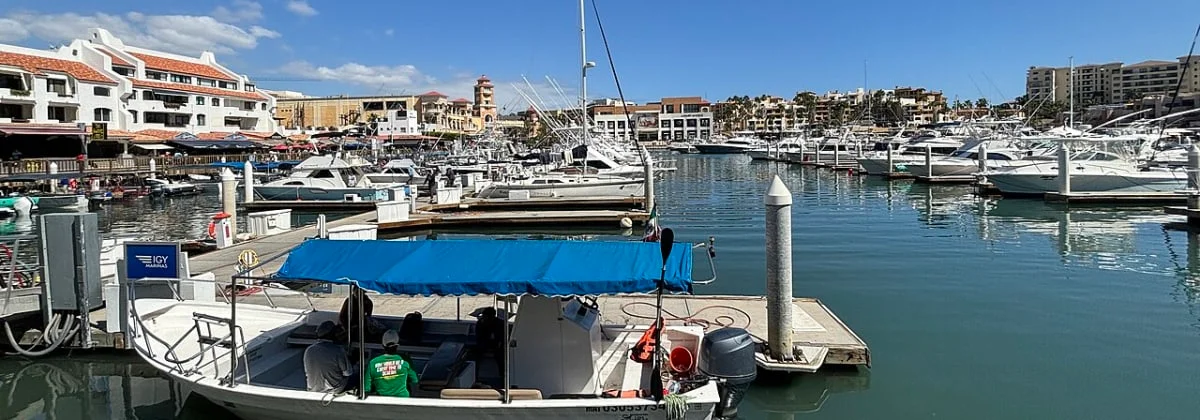
Quick answer: Mexico’s Pacific yacht market is a cruising destination with purchase optionality, not a Fort Lauderdale substitute. Los Cabos delivers sportfishing and marina luxury at the tip of Baja. La Paz is the Sea of Cortez hub for cruiser-trawler culture, whale seasons, and island hopping. Puerto Vallarta anchors mainland Pacific cruising with strong expat services. Most US buyers still route through the San Diego yacht market for USD purchase, financing, and insurance, then cruise south with compliant TIP and clearance paperwork. Treat Mexican purchase as a legal project first and a lifestyle decision second.
Which Mexico Pacific Market Fits Your Brief?
Mexico’s three Pacific markets split by vessel type rather than by budget, though Los Cabos prices highest at USD 200K-5M+. Los Cabos is sportfish and luxury slips with Pacific access; La Paz at USD 150K-2.5M is the Sea of Cortez trawler and cruiser market; Puerto Vallarta at USD 180K-3M is coastal motor yachts with an expat base. TIP and SAT diligence is mandatory in all three.
| Factor | Los Cabos | La Paz | Puerto Vallarta |
|---|---|---|---|
| Best for | Sportfish, luxury slips, Pacific runs | Trawlers, cruisers, Cortez islands | Coastal motoryachts, expat base |
| Price sweet spot | USD 200K-5M+ | USD 150K-2.5M | USD 180K-3M |
| Inventory depth | Strong fishing and motoryacht | Strong cruising/trawler | Moderate brokerage |
| Cruising | Pacific offshore, Cabo culture | Sea of Cortez islands | Mainland coast, Banderas Bay |
| US gateway | Long run from San Diego | 70-90 nm from San Diego area | Further south; fly-in common |
| Compliance | TIP/SAT diligence mandatory | Same | Same |
Los Cabos
For buyers, Cabo is emotionally compelling, desert meets ocean, tournament culture, and direct Pacific access. The compliance case is separate: confirm TIP status, SAT import history, and whether the vessel is legally offered for sale to a foreign buyer without triggering new duty exposure.
Start here if: Sportfishing is central; you want luxury marina infrastructure at Baja’s tip; you accept premium pricing and heavy seasonal tourism.
What locals know: Tournament seasons and US holiday weeks compress slip availability and inflate asking prices. Shoulder months outside peak US vacation windows often produce better survey access and seller realism.
La Paz
Inventory includes Nordic Tug-style trawlers, pilothouse cruisers, sailing catamarans, and expedition-capable motor yachts. Buyers who read John Steinbeck and want calm-water island hopping with occasional offshore hops find La Paz aligned with their brief.
La Paz also sits on the natural routing path for San Diego owners heading south, often the first major mainland Mexico provisioning stop after Baja hops.
Start here if: Sea of Cortez cruising is the five-year plan; you want trawler/cruiser inventory; you prefer authentic marina culture over tournament flash.
Compliance note: Cortez cruising crosses multiple protected areas and clearance zones. Charts, permits, and insurance endorsements should be confirmed before purchase, not improvised at the fuel dock.
Puerto Vallarta
Start here if: You want mainland Mexico lifestyle with expat support; Banderas Bay defines your cruising; you may live aboard part-time.
Caution: Distance from San Diego is materially farther than La Paz, US buyers who plan frequent border crossings should model time and fuel honestly.
San Diego or Mexico Pacific?
Share your brief, buy in the US and cruise south, or purchase in Mexico, and we route you to brokers who understand cross-border TIP and SAT diligence. Independent, no listings.
US Buyer Routing from San Diego
Most US buyers should close in San Diego and cruise Mexico rather than buying locally, because the purchase and the cruising can be separated cleanly. Close in USD with US financing and insurance, provision and maintain in San Diego’s deeper yard talent pool, clear Mexico properly with TIP and vessel documentation, cruise Baja and the Sea of Cortez seasonally, and return north before insurance or immigration limits bite.
- Buy with USD closing, US financing, and US insurance base in San Diego
- Provision and maintain in San Diego yards with deep talent pool
- Clear Mexico properly with TIP, passports, and vessel documentation
- Cruise Baja and Sea of Cortez seasonally
- Return north before insurance or immigration limits bite
The San Diego yacht market hub explains SoCal inventory, California sales tax (no Florida-style cap), and the 70-nautical-mile Ensenada gateway. San Diego is not “better” than Mexico, it is structurally easier for US nationals who want US legal infrastructure with Mexico cruising optionality.
When Mexican purchase makes sense:
- You are Mexico resident or establishing legitimate long-term presence
- You found irreplaceable locally configured inventory
- Your counsel confirms favorable import and registration path
- You accept Mexico as home port for years, not a single season
When Mexican purchase is the wrong tool:
- You want quick USD flip or US bank financing on unclear import status
- Seller cannot produce SAT/TIP documentation
- You plan mostly US waters with occasional Mexico trips, San Diego purchase is simpler
Tip, Sat, and Import Cautions (not Legal Advice)
Four documentation issues decide whether a Mexican-based yacht can lawfully be sold, exported or even kept. A Temporary Import Permit is required for many foreign-flag recreational vessels beyond allowed limits and is verified through Banjercito; SAT import status governs the legality of a sale and any future export; Mexican-flag and foreign-flag registration paths differ materially; and overstaying an import authorisation brings fines and detention.
| Topic | Buyer takeaway |
|---|---|
| TIP (Temporary Import Permit) | Required for many foreign-flag recreational vessels beyond allowed limits, verify through Banjercito processes |
| SAT customs | Import status affects legality of sale and future export |
| Registration | Mexican-flag vs foreign-flag paths differ materially |
| Time limits | Overstaying import authorization creates fines and detention |
| Insurance | US policies may exclude Mexico or require endorsements |
| Crew and firearms | Strict, declare and counsel review |
Red flags:
- Seller says “TIP is not needed” without written authority citation
- Broker conflates Baja free zone rumors with nationwide rules
- Import paperwork is “being processed” during closing pressure
- Cash closing without escrow to avoid documentation trail
Retain Mexican customs and maritime counsel independent of the seller. Cross-check US re-entry plans with US counsel if the vessel will return to California; see yacht import tax (US) for framing.
Mexico Pacific vs San Diego vs Florida
Most Mexico Pacific programmes start with a US purchase rather than a Mexican one. San Diego offers a USD closing, deep service and an overnight hop to Ensenada, while buying in La Paz or Los Cabos only makes sense once the import path is clear.
| Buyer goal | Start here | Why |
|---|---|---|
| SoCal + Mexico seasonal cruising | San Diego purchase | USD closing, deep service, Ensenada hop |
| Sea of Cortez liveaboard | La Paz; if import path clear | Cruising culture match |
| Sportfish tournament lifestyle | Los Cabos | Inventory and culture |
| Caribbean winter + Pacific summer | Florida purchase + migration plan | Tax cap, Caribbean network; see Caribbean yacht market |
| Atlantic-only cruising | Florida yacht market | Wrong ocean for Mexico-first purchase |
Inventory Character by Region
Inventory in the Mexican Pacific is regional rather than national, and each hub runs a different fleet. Los Cabos is sportfish and centre console territory, La Paz carries the trawler and pilothouse cruising fleet, and Puerto Vallarta sits between the two.
| Type | Los Cabos | La Paz | Puerto Vallarta |
|---|---|---|---|
| Sportfishing convertible | High | Moderate | Moderate |
| Center console | High | Moderate | Moderate |
| Trawler / pilothouse | Low | High | Moderate |
| Sailing catamaran | Moderate | Moderate | Moderate |
| Luxury motoryacht 60ft+ | Moderate | Lower | Moderate |
Survey priorities in desert-marine climate:
- Air conditioning and freshwater systems, heavy runtime
- Generator hours vs stated use
- UV damage to gelcoat, lines, and canvas
- Fuel quality history, storage and biocide treatment
- Electronics corrosion, humid salt air plus heat cycles
Seasonal Buying and Cruising Calendar
The Mexican Pacific buying calendar is set by hurricane season rather than by demand. November to April is peak use with harder deals, May and June build pre-hurricane leverage, and July to October produces motivated sellers alongside real storm exposure.
| Period | Los Cabos | La Paz | Puerto Vallarta |
|---|---|---|---|
| Nov-Apr | Peak season; harder deals | Peak cruising; whales | Peak expat season |
| May-Jun | Pre-hurricane leverage building | Shoulder; heat rising | Shoulder |
| Jul-Oct | Hurricane awareness; selective deals | Hot; motivated sellers | Rain season planning |
| Sportfish events | Spring tournaments move traffic | n/a | n/a |
Marina Economics (directional)
Confirm live quotes before modeling ownership:
| Market | 45 ft slip (indicative monthly USD) | Notes |
|---|---|---|
| Cabo premium | 800-1,800+ | Tournament season compression |
| La Paz | 400-900 | Good value; provisioning easy |
| Puerto Vallarta | 500-1,200 | Expat demand varies |
San Diego to Mexico
The standard southbound route runs San Diego to La Paz in five stages, and the first Mexico port matters most. Close, bind insurance and complete survey corrections in San Diego Bay, clear at Ensenada roughly 70nm south, take Magdalena Bay or Pacific hops on weather windows, enter the Sea of Cortez at La Paz for provisioning and whale-season anchoring, then jump to Cabo or the mainland by season and range.
- San Diego Bay: close purchase, bind insurance, final survey corrections
- Ensenada (roughly 70 nm): first Mexico port for many fleets; Baja Norte clearance culture
- Magdalena Bay or Pacific hops: weather dependent; trawler owners often take inside weather windows
- La Paz: Sea of Cortez entry, provisioning, whale season anchoring
- Cabo or mainland jump: depending on season and vessel range
Each leg requires fuel planning, weather routing, and confirmed TIP status. Owners who skip Ensenada paperwork to “save a day” often pay fines that exceed broker fees many times over.
Northbound return before hurricane season or insurance deadlines needs equal discipline, US re-entry customs for foreign-built vessels may apply depending on prior import history.
Los Cabos Marina Landscape
Tournament calendar (Bisbee’s, other billfish events) moves slip demand and transient rates. Buyers inspecting during tournament weeks see maximum energy, and maximum pricing distortion.
La Paz and Sea of Cortez Island Cruising
Sea of Cortez cruising rewards slow exploration:
- Isla Espiritu Santo, anchorages and kayak culture near La Paz
- Isla San Jose, protected bays for weather holes
- Bahia de Los Angeles, remote, provisioning limited, stunning clarity
- Whale seasons, gray whales calving areas require respectful distance rules
La Paz malecon services, provisioning, banks, flights, make it the best Cortez base for absentee owners who fly in seasonally.
Puerto Vallarta and Mainland Coast
Vallarta purchase diligence mirrors Cabo and La Paz: SAT import file review first, survey second, deposit last.
Charter, Fractional, and Tax Myths
If charter income is part of the plan, model flag, VAT or sales tax, and commercial insurance separately with counsel in both countries if the vessel crosses borders.
Florida and Caribbean Comparison for Dual-ocean Owners
Optimising one hull across both oceans rarely works, because the migration cost is real and the compliance gaps are expensive. The Pacific plan bases in Mexico, the Cortez or San Diego for summer; the Atlantic plan winters in Florida or the Caribbean. Some dual-season owners keep two boats, a San Diego coastal boat for Mexico and a Florida boat for the Caribbean, which costs more and keeps compliance clean.
| Season | Pacific plan | Atlantic plan |
|---|---|---|
| Summer | Mexico / Cortez / San Diego base | n/a |
| Winter | n/a | Florida or Caribbean yacht market |
| Purchase logic | Often San Diego or Florida separately | Florida tax cap pulls large motor yachts |
Trying to optimize one hull across both oceans without migration cost honesty leads to insurance gaps and customs surprises. Dual-season owners sometimes keep a San Diego coastal boat for Mexico and a Florida boat for Caribbean, expensive but clean compliance.
Electronics, Spares, and Service in Baja
Yards in La Paz and Cabo handle diesel work, air conditioning, and fiberglass, major repower may still route to San Diego or mainland Mexico depending on parts availability. Build relationship with a San Diego mechanic before you need an emergency tow from Isla San Jose.
Cross-Border Closing Workflow (US Buy + Mexico Cruise)
Recommended US-centric path:
- Source inventory in San Diego with US broker and escrow
- Survey and sea trial in California waters
- Close with documented US tax treatment
- Bind insurance with explicit Mexico cruising endorsement
- Obtain TIP and crew passports before first Mexico port
- Stage provisioning in San Diego; depart for Ensenada or La Paz with plan
Recommended Mexico-purchase path (only with counsel sign-off):
- Mexican counsel reviews SAT import file before LOI
- Written TIP/registration transfer plan attached to contract
- Independent survey with haul-out in Baja yard
- Escrow with identifiable closing agent
- Insurance bound for intended Mexico and US waters if applicable
- Post-close audit of all customs stickers and documentation onboard
Process frameworks: yacht buying guide, used yacht buying guide, yacht delivery voyage guide.
Mexico Pacific Market Scale and Context
Mexico has no single national yacht corridor: the market is three hubs at Cabo, La Paz and Vallarta, with US buyer influence routed almost entirely through San Diego. Dominant types are sportfish, cruisers and trawlers, and the superyacht pool is limited.
| Metric | Directional estimate | Notes |
|---|---|---|
| Primary hubs | Cabo, La Paz, Vallarta | No single national corridor |
| US buyer influence | High via San Diego | Gateway routing dominant |
| Dominant types | Sportfish, cruisers, trawlers | Superyacht pool limited |
| Compliance | TIP/SAT central | Never informal |
| Atlantic alternative | Florida / Caribbean | Different buyer profile |
Market Data Snapshot (2026 Planning)
Three figures frame a Mexico Pacific plan. San Diego to Ensenada is roughly 70 nautical miles and an overnight gateway, San Diego to La Paz is about 800km by coastal routing, and a Temporary Import Permit typically runs ten years subject to current Banjercito rules.
| Data point | Figure | Notes |
|---|---|---|
| San Diego to Ensenada | 130 km | Roughly 70 nautical miles, overnight gateway |
| San Diego to La Paz | 800 km | Coastal routing varies by vessel |
| TIP validity (typical) | 10 years | Verify current Banjercito rules |
| Cabo slip (45 ft) | $1,800/month | Tournament weeks price higher |
| La Paz slip (45 ft) | $900/month | Often best Cortez value |
| Peak cruising season | 5 months | Nov-Mar highest traffic |
| California tax (comparison) | 10.75% | No cap vs Florida limit |
| Florida tax cap | $18,000 | Pulls Atlantic buyers east |
| San Diego boat show | 2026 | January pre-season inventory |
| Puerto Vallarta flight time | 180 minutes | Typical US West Coast connection |
| Baja survey lead time | 6 weeks | Book before May inspection trips |
Buying and Owning in Mexico
A Mexican purchase turns on the temporary import permit and on where the vessel clears, and both are far cheaper to settle before an offer than after one.
| Ownership guide | What it settles |
|---|---|
| Panama registration | Open register fees and process |
| Cross-border financing | Lending against a foreign-flagged hull |
| Annual running costs | Full budget from 30ft to 100ft+ |
| Yacht insurance | H&M, P&I and what drives the premium |
In numbers: for a Mexico-based yacht the live variables are TIP status and SAT import treatment rather than brokerage depth. Offshore registration runs roughly $1,500-$25,000 initial by register and length, non-resident lending caps at 65-75% loan-to-value over four to eight weeks, and running costs track the 8-15% of hull value that applies anywhere.
Charter Guides Related to This Market
| Charter guide | Best for |
|---|---|
| Mediterranean yacht charter | Summer Med charter comparison |
| Bahamas yacht charter | Caribbean winter from US staging |
| Bareboat charter | Sea of Cortez bareboat where offered |
| Yacht charter guide | MYBA contract workflow and APA basics |
| Crewed yacht charter | Crewed format, preference sheets, gratuities |
Red Flags and Buyer Checklist
- Red flag: no written TIP or SAT import documentation available for review.
- Red flag: seller pressure to close before counsel reviews customs file.
- Red flag: US insurance binder excludes Mexico waters without endorsement option.
- Verify hull ID matches registration and import records.
- Survey air conditioning, generators, and fuel systems, desert heat is brutal on machinery.
- For San Diego routing, confirm California tax treatment before deposit, no Florida cap.
- Plan re-entry to US if seasonal, customs and immigration are not automatic.
Frequently Asked Questions
Los Cabos for sportfish and luxury marina life. La Paz for Sea of Cortez cruising and trawler inventory. Puerto Vallarta for mainland Pacific and expat infrastructure. US buyers often compare San Diego purchase plus Mexico cruising versus local Mexican closing.
San Diego is structurally easier for USD closing, US financing, and insurance, with Mexico cruising via compliant TIP. Mexican purchase can work for Mexico-centric owners but requires SAT and customs diligence before deposit.
Temporary Import Permit from Banjercito governs many foreign vessels in Mexico. Missing or expired TIP creates fines, detention, and insurance problems. Verify current rules for your vessel before cruising, not from dock rumors.
Yes in principle, but SAT customs treatment, temporary against permanent import status and registration paths are all case-specific, and incomplete import paperwork is a deal-breaker rather than a delay. A Temporary Import Permit is required for many foreign-flag recreational vessels beyond allowed limits and is verified through Banjercito; overstaying an authorisation brings fines and detention. Retain independent Mexican maritime and customs counsel before the LOI, not through the broker.
May to October can offer leverage, since it sits outside the November to April cruising season when absentee owners reduce use. Los Cabos spring tournaments move fishing inventory and inflate asking prices in the same weeks. Book survey haul-outs early: Baja yards fill quickly, and haul-out availability rather than broker schedules is usually what sets the inspection date.
Florida offers deeper inventory and USD tax cap for Atlantic/Caribbean plans. Mexico Pacific excels for Sea of Cortez and San Diego gateway routing, different ocean, different compliance stack.
SAT import history, TIP status, lien search, survey of heat-stressed systems, and insurance covering Mexico waters. For cross-border plans, confirm US re-entry and California tax treatment if buying in San Diego instead.
Request a yacht buyer consultation
Share your budget, target LOA, and use case. We reply within one business day with matched brokers or surveyors.