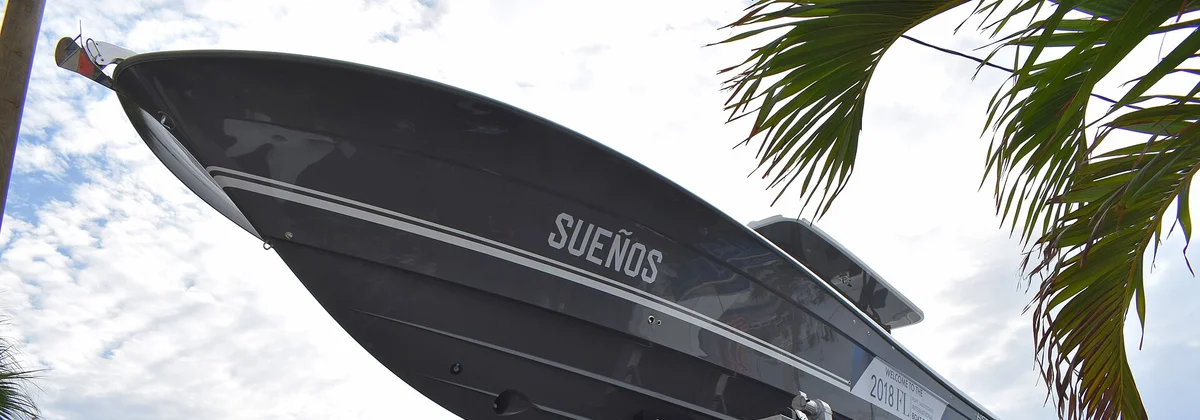
Quick answer: The Fort Lauderdale International Boat Show, held in late October or early November, is the brokerage show. It is in-water throughout, spread across several sites on the Intracoastal, and it puts more listed boats on one set of docks than any other event in the world. It sits at the end of the northern season, which is why it matters: sellers arrive having watched a summer pass, and the fortnight after the show closes is frequently where the year’s best offers are written.
What Is FLIBS and Who Is It For?
Fort Lauderdale is the centre of the American yacht brokerage industry for the other 51 weeks of the year as well. The refit yards, the crew agencies, the surveyors, the riggers and the painters are concentrated along a corridor of roughly 70 miles from Miami to Palm Beach, and Fort Lauderdale sits in the middle of it. The show is that industry putting its inventory on display for five days.
That makes FLIBS structurally different from a manufacturer-led show. The boats on the docks are not mostly demonstrators trucked in for the week. Many of them are listed boats that live nearby, moved a few miles to a show berth. When the show closes they go back to the same brokerage docks, which is why an offer made after the show is still an offer on a boat you can reach.
| What FLIBS concentrates | Why it matters to a buyer |
|---|---|
| Brokerage inventory above 40 feet | The largest single-week selection in the world |
| Listing brokers, in person | You meet the person holding the file, not a call centre |
| Refit yards and surveyors | The people who will inspect and fix the boat are local |
| Superyacht presence above 24 metres | Yard and management contacts, largely by appointment |
| Tenders, toys and systems suppliers | The refit shopping list in one place |
How Is Fort Lauderdale Different From Miami?
The two Florida shows are eight months apart and answer opposite questions.
| Miami, February | Fort Lauderdale, autumn | |
|---|---|---|
| Emphasis | New boats and model-year launches | Brokerage and used inventory |
| Format | Convention hall plus in-water | In-water across several sites |
| Seller position | Start of selling season, taking orders | End of season, holding stock |
| Best for | Comparing builders, ordering a build | Finding and negotiating on a real boat |
| Price flexibility | Package content, not hull price | Genuine movement on listed boats |
| Length focus | 20 feet upward, weighted small and mid | 40 feet upward, weighted large |
A buyer who goes to Miami looking for a used 55-footer will be disappointed. A buyer who goes to FLIBS looking to compare next year’s centre consoles will find fewer of them than a January show in their own state would offer. The shows are not competitors; they are different points in the same annual cycle.
What Does Show Week Do to the Local Market?
This is the part almost nothing published about FLIBS explains, and it is the part that actually affects a purchase.
Show week compresses the whole Fort Lauderdale marine service industry into a few days. Surveyors who would normally have availability inside a week are booked out. Haul-out slots at the yards that do out-of-water inspections disappear. Mechanics doing engine surveys are committed. Accommodation across the city runs at show pricing. And in the weeks immediately afterwards, every accepted offer from the show goes to survey at once, so the queue does not clear when the tents come down.
| Resource | Normal week | Around show week |
|---|---|---|
| Pre-purchase surveyor | Days to a week | Booked out, plus a post-show backlog |
| Haul-out slot for survey | Within a week | Scarce for 2 to 3 weeks after |
| Engine survey mechanic | Days | Committed through the show and after |
| Hotel rates | Baseline | Show pricing, book 8 to 12 weeks out |
| Broker attention | Available | Fully committed during the 5 show days |
Insider tip: book your surveyor before you fly in, with a placeholder date in the fortnight after the show, and tell them you may or may not use it. Most surveyors will hold a tentative slot for a serious buyer. The buyers who lose boats at FLIBS usually lose them on the survey clock, not on price.
Should You Offer During the Show or After?
Both are legitimate and they trade different risks.
Offering during the show puts you in front of a broker while the boat is being walked by other people, which creates urgency on both sides. If the boat is genuinely in demand, this is where you secure it. The cost is that you are negotiating against the seller’s best mood of the year.
Offering after the show meets a different seller. The busiest week of the year has just passed. If the boat did not sell, the owner is now looking at winter storage, continued insurance, continued dockage and another season. Brokers know this and it is why so many FLIBS-originated contracts carry a date in November rather than during the show itself.
| Timing | You gain | You risk |
|---|---|---|
| During the show | Securing a boat that will sell | Negotiating at the seller’s strongest moment |
| Within 2 weeks after | Seller motivation, broker attention returning | The boat sells to someone at the show |
| 4 to 8 weeks after | Winter carrying costs weigh on the seller | Best boats are gone, survey queue is long |
Going to Fort Lauderdale with a shortlist?
Tell us the length band, the budget and where the boat will live. We will tell you what to walk, what to ask each broker, and what to line up for the survey window.
What Should You Arrange Before You Fly In?
| Item | Lead time | Why |
|---|---|---|
| Broker engaged on your side | 4 to 8 weeks | A buyer broker walks you to the right docks |
| Shortlist of listings to board | 2 to 3 weeks | The show is too large to browse productively |
| Surveyor placeholder slot | Before the show | Post-show queue runs 2 to 3 weeks |
| Accommodation | 8 to 12 weeks | Show pricing and full occupancy |
| Finance pre-approval | Before the show | Lets you offer subject to survey with credibility |
| Insurance indication | Before the show | Hull value, age and cruising area drive it |
| Dockage enquiry for after purchase | Before the show | Local berths are tight; see the slip cost guide |
Where the boat will live afterwards is a question worth answering before you offer, not after. Berth availability in South Florida is genuinely constrained and the monthly cost is a permanent line in the budget; the slip and dockage cost guide sets the numbers out by length and region. The Fort Lauderdale market page covers how the local service corridor shapes running cost more broadly, and the pre-purchase survey guide sets out what the inspection you are queuing for actually covers.
Red Flags on the FLIBS Docks
Insider tip: ask the listing broker how long the boat has been on the market and what the price history is. On a brokerage boat that is a factual question with a factual answer, and a broker who deflects it is telling you something. A boat that has been listed for 14 months with two reductions is a very different negotiation from one listed six weeks ago.
- A contract offered without survey and sea trial conditions.
- A broker who will not state days-on-market or price history.
- “Berth included” claimed without a marina letter naming the contract party and its assignability.
- A survey report from the seller presented as a substitute for your own.
- Deposit instructions that arrive by email without independent verification of the escrow account.
- Pressure to sign before the show ends, on a boat that has been listed all season.
Wire fraud around show weeks is a real and recurring problem, because the volume of legitimate deposit traffic gives cover. Verify escrow account details by voice with a number you obtained independently, never from the email carrying the instructions. The closing and escrow guide sets out the sequence.
Buyer Scenarios for FLIBS
First brokerage purchase, 40 feet to 55 feet. Engage a buyer broker 6 weeks out and give them a shortlist. Walk six boats maximum in a day; more than that and they blur. Plan to offer in the week after the show.
Trading up, 55 feet to 75 feet. Your trade decides the deal. Get it valued before the show and consider listing it during the show week, when the buyer traffic is at its annual peak. Read the valuation guide first.
Sportfish buyer. FLIBS is one of the strongest sportfish weeks of the year and the tower and cockpit work you want to inspect is only assessable afloat. Budget a full day for the sportfish docks alone.
Superyacht buyer above 24 metres. Access is largely by appointment through management companies and brokers. Arrange the appointments 4 to 6 weeks ahead; walking up is not how that part of the show works.
Refit shopper. If you already own and are planning work, FLIBS is the most efficient day of the year for it: the yards, the systems suppliers and the tender builders are all present and quoting.
Pros and cons of buying at Fort Lauderdale
| Advantages | Disadvantages |
|---|---|
| The deepest brokerage inventory of any show week in the world | The scale makes unfocused browsing genuinely unproductive |
| Listing brokers present in person with the file in hand | Every buyer is there at once, so demand is concentrated too |
| End-of-season timing puts real pressure on unsold stock | Survey and yard capacity is fully booked for weeks around it |
| Boats are local, so an offer after the show is still practical | Accommodation and travel run at show pricing |
| Refit yards, surveyors and suppliers all reachable in one week | Wire fraud attempts spike around high-volume deposit weeks |
Buying at FLIBS this autumn?
We can help you shortlist before you fly in, and line up the survey window that decides whether the deal holds.
Frequently Asked Questions
FLIBS runs in late October or early November, over five days, across several sites along the Intracoastal Waterway with Bahia Mar as the anchor. Dates shift by a week or two between years, so confirm with the organiser before booking. The autumn placement is the important part: it sits at the end of the northern season, when brokerage inventory is at its deepest.
Miami is February and new-boat led, with an indoor convention component. FLIBS is late autumn, in-water throughout, and carries the largest concentration of brokerage inventory of any show in the world. Miami answers what is new. Fort Lauderdale answers what is actually for sale, at prices sellers have been sitting with all season.
It is the single best week of the year for it. Hundreds of listed boats are afloat and boardable in one place, the brokers holding them are on the dock, and sellers have watched a full season pass without a sale. No amount of online searching replicates walking six comparable boats in an afternoon.
It fills them. The local surveyor pool, the haul-out yards and the mechanics who do engine surveys book out around FLIBS and stay busy for weeks afterwards as show deals go to survey. Line up your surveyor before the show, not after you have an accepted offer, or you will wait.
Both work, and they are different tactics. An offer during the show gets attention while the broker and seller are engaged and comparing. An offer in the fortnight after the show meets a seller who has just watched the busiest week of the year pass without a deal. The second is often the better position, and it costs you the risk that the boat sells at the show.
Florida caps the total state sales, use and discretionary surtax on a single vessel, which turns tax into a fixed amount rather than a percentage on larger boats. Whether the cap helps you depends on where the boat will be kept and registered afterwards, not on where you bought it. Read the Florida vessel sales tax cap page and take your own position to a Florida tax professional.
For a first brokerage purchase above 40 feet, yes. The show is too large to cover without someone who knows which docks hold what, and the buyer broker is generally compensated out of the listing commission rather than by you. The value is in the shortlist and the survey coordination, not in the introductions.
Request a yacht buyer consultation
Share your budget, target LOA, and use case. We reply within one business day with matched brokers or surveyors.