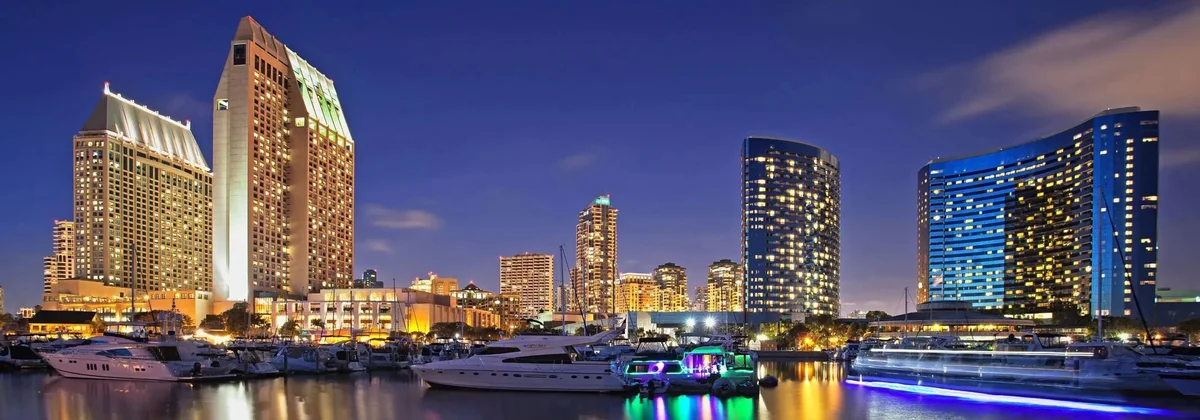
Quick answer: San Diego is an in-water show on a bay where slips are the binding constraint. Two things separate buying here from buying almost anywhere else in the US: the Pacific delivers long ocean swell rather than short chop, which rewards deeper deadrise and real freeboard; and Mexican waters are an hour away, which brings permits, a temporary import permit and an insurance question that most policies do not answer by default.
Swell Is Not Chop
Buyers arriving from a lake, a bay or the Atlantic side routinely misjudge this, and it changes the shortlist.
| Short chop, bays and lakes | Pacific swell | |
|---|---|---|
| Wave shape | Steep, close together | Long period, larger, further apart |
| What punishes a flat hull | Slamming | Broaching and an unsettled ride |
| Deadrise priority | Moderate | High |
| Freeboard priority | Moderate | High |
| Length that feels comfortable | Smaller | Larger for the same conditions |
| Fuel and range | Modest | Matters, runs are long |
The practical consequence is that a boat that feels big on a bay feels small off Point Loma on a summer afternoon, and the honest size floor for regular offshore use here is higher than most first-time buyers assume. The centre console page covers the mainstream offshore option and the sportfish buying guide the serious end of it.
Insider tip: at an in-water show, do not just board the boat, stand in the cockpit and look at the freeboard from inside. A cradle at an indoor show puts a boat at eye level and flatters it; afloat you can see how high the gunwale really sits when you are fighting a fish or bringing somebody back aboard. That is the single judgement an in-water show gives you that no photograph does.
The Slip Is the Constraint
| Question | Why it comes first here |
|---|---|
| Is a slip available, and where | Bay marinas run at very high occupancy |
| What is the waiting time | Popular basins have real lists |
| What length and beam class is offered | It may cap your purchase directly |
| All-in monthly figure | Power, liveaboard fees and taxes are separate lines |
| Distance to the ocean | Some basins add half an hour each way |
| Mooring or dry storage alternatives | Fewer options than in Florida |
Settle this before you shortlist boats, not after. In a constrained market the marina’s answer about length and beam is effectively a purchase decision made by somebody else, and it is better to know it in advance. The general comparison is in cost to dock a boat, and the annual picture in the ownership cost guide.
The Mexico Question
For a large share of San Diego owners, the trip south is part of why they bought the boat. It is entirely routine and it is not paperwork-free.
| Requirement | What to arrange, and when |
|---|---|
| Mexican fishing permits | For every person aboard if any tackle is aboard, arranged in advance |
| Temporary import permit for the vessel | Required in most circumstances, obtained before departure |
| Insurance navigational limits | Confirm in writing that cover extends into Mexican waters |
| Crew documentation | Passports for everyone aboard |
| Reporting on return | Follow the current US procedure for arrival |
| Local rules on catch and gear | Separate from US rules, and enforced |
The insurance line is the one that catches people. Marine policies carry navigational limits, and a policy written for southern California may simply stop at the border or require a specific endorsement. Ask the question explicitly, before you buy, and get the answer in writing; the general drivers behind marine policy structure are in the boat insurance cost guide and the insurance checklist.
What an In-Water Show Settles, and What It Does Not
An in-water show answers more than an indoor one and it is still not a survey.
| Question | Settled on the dock? | Where it is actually settled |
|---|---|---|
| Layout, headroom, storage | Yes | On the boat |
| How the hull sits with load | Yes | Afloat, which is the point |
| Freeboard as it really feels | Yes | Standing in the cockpit |
| Deck work at real height | Yes | Walking the side decks |
| Ride in a swell | No | A sea trial |
| Noise and vibration at cruise | No | A sea trial |
| Moisture in deck or hull | No | Survey, with a meter |
| Engine condition | No | Survey and oil analysis |
| Corrosion and bonding | No | Survey, hauled |
That last row deserves weight in a market where boats sit in warm salt water twelve months a year. Bonding systems, anodes and shore-power wiring are where year-round immersion shows first, and a surveyor who works this harbour knows which marinas have stray-current histories. The scope of each survey type is in marine survey types explained, and what to test on the water is in the sea trial checklist.
Book both for the weeks after the show rather than during it. Every competent surveyor in the county is committed during show week, and a rushed survey is worse than no survey because it buys false confidence.
What It Costs to Keep a Boat Here
| Line | Typical range | Note |
|---|---|---|
| Slip, per ft per month | $15 to $30 | Location and marina dependent |
| Liveaboard surcharge, if applicable | Substantial | Separate approval, limited berths |
| Bottom cleaning, monthly | $3 to $6 per ft | Growth is year-round in warm water |
| Bottom paint, per haul | $25 to $50 per ft | Every 1 to 3 years depending on paint |
| Survey, if buying used | $20 to $30 per ft | Book ahead, good surveyors are busy |
| Short haul-out for that survey | $300 to $900 | Yard and size dependent |
Two of those lines are specific to warm salt water. Monthly diver service is normal here rather than optional, and growth never stops, so the cost of a clean bottom is an every-month figure rather than an annual one.
Two of those lines are worth separating out. Monthly diver service is the norm here rather than an optional extra, because growth in warm salt water never pauses; owners who skip it pay for it in fuel and then in paint. And California’s sales and use tax treatment of a boat purchase deserves its own conversation with an accountant before the closing rather than after, alongside the general position in boat sales tax by state.
Pros and cons of buying at the San Diego show
| Advantages | Disadvantages |
|---|---|
| In-water, so judgements about the boat are real | Weather dependent, and the dock is exposed |
| Year-round season, the boat is used from day one | Slip scarcity may cap the boat you can buy |
| Strong offshore and sportfishing selection | Thin at the small trailerable end |
| Brokers and dealers present together | Fewer boats than a Florida in-water show |
| Mexico access adds real cruising range | It also adds permits and insurance questions |
| Salt water year-round means used boats vary | Growth and corrosion never take a winter off |
Which Buyer Should Go
| Buyer | Is San Diego the right show? |
|---|---|
| Offshore and sportfishing | Yes, this is the core of it |
| Coastal cruising to the Channel Islands or south | Yes |
| Boat with real Mexico ambitions | Yes, and start the paperwork conversation there |
| Bay day boat and harbour use | Yes, though selection is thinner |
| Small trailerable boat | Limited, a regional dealer serves you better |
| Brokerage yacht over 80 ft | Fort Lauderdale or the European shows |
Earlier in the process, read how to buy a boat and buying a yacht at a boat show, and use the show calendar to place it against the other in-water weeks. If used is the plan, run the used boat inspection checklist, paying attention to corrosion and bonding, which year-round salt immersion punishes hard.
Buying in southern California?
Tell us your berth situation and whether Mexico is part of the plan, and we will tell you what that combination actually allows.
Frequently Asked Questions
The main in-water show usually runs over four days in summer on the bay, with other smaller shows through the year. Confirm dates with the organiser before booking. The in-water format is the point: boats are afloat, so what you learn on the dock is real rather than a cradle-lit impression.
Boats built for swell rather than chop. The Pacific delivers a long ocean swell rather than the short steep chop of a bay or a lake, which favours deeper deadrise, real freeboard and hulls that ride rather than skip. Sportfishers, offshore centre consoles and serious cruising boats dominate for exactly that reason.
Genuinely hard, and it should be settled before the boat. San Diego Bay's marinas run at very high occupancy, waiting lists exist at the popular basins, and the length and beam class you can be offered may cap your purchase. Ask for the all-in monthly figure and the waiting time before you decide on a length.
Paperwork arranged before you go, not at the border. Running down to the Coronado Islands or Ensenada requires Mexican fishing permits for everyone aboard if there is any tackle on the boat, a temporary import permit for the vessel in most circumstances, and confirmation that your insurance extends into Mexican waters, which many US policies do not.
Frequently not by default. Marine policies carry navigational limits, and a policy written for southern California may stop at the border or require an endorsement. Ask the question explicitly and in writing before you buy the boat, because for many San Diego owners the trip south is the reason they wanted it.
In cost per usable day, yes. San Diego boats are used in every month of the year, which spreads the annual cost across roughly twice the outings of a northern boat. What you pay for it is slip scarcity, California's cost base, and salt water that never gives the boat a winter off.
Freeboard from inside the cockpit. A cradle at an indoor show puts a boat at eye level and flatters it; afloat you can see how high the gunwale actually sits when you are working a fish or helping somebody back aboard. That is the judgement an in-water show gives you and no brochure photograph ever will.
Request a yacht buyer consultation
Share your budget, target LOA, and use case. We reply within one business day with matched brokers or surveyors.