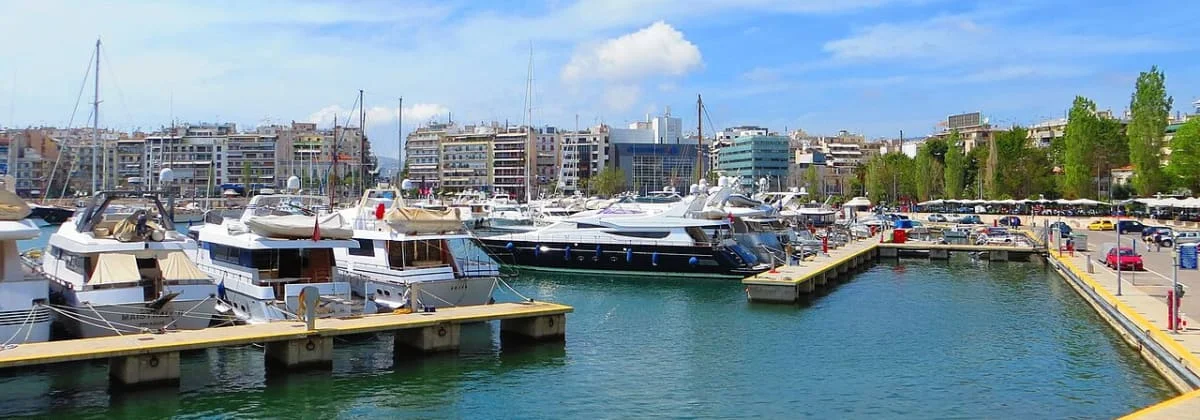
Quick answer: Selling a yacht in Greece means positioning the vessel where Mediterranean buyers already shop, Athens/Piraeus for brokerage motor and sailing inventory, Lefkas for Ionian charter boats, Rhodes for Dodecanese routing, then proving EU VAT status, clearing Hellenic or flag-state registry, and pricing against sold comparables in the same tax bracket. Plan 90-210 days at market price if records are clean; export to non-EU buyers adds customs sequencing but widens the pool.
Selling in Greece and unsure which broker fits your yacht?
Tell us your LOA, flag, and home marina, we route you to vetted Greek listing brokers at no cost.
Why Does Greece Matter for Mediterranean Yacht Resales?
Greece is not a fringe market for yacht exits, it is the Eastern Mediterranean’s largest charter arena and an active resale corridor for production sailing yachts, catamarans, and motor yachts from the high thirties to the low seventies in feet. The Greece yacht market combines 6,000-plus islands, the Med’s deepest bareboat fleet, and broker infrastructure anchored in Athens, Piraeus, Lefkas, and the Dodecanese. Sellers who treat Greece as “only a charter base” miss buyers who fly in specifically to compare VAT-paid inventory against Croatia and Turkey.
The resale logic is geographic and documentary at once. A yacht listed in Lavrion with clean Greek registry papers, charter-licence history where relevant, and provable VAT status speaks to three buyer types: EU upgrade owners, charter operators refreshing fleet, and international purchasers comparing Eastern Med value. A yacht listed with vague VAT language and incomplete Hellenic paperwork sits while better-documented neighbours sell.
Athens and Piraeus function as the institutional hub, Zea Marina, Flisvos, and Alimos concentrate surveyors, maritime lawyers, and brokers who co-broke with CYBA and IYBA networks. Lefkas and Corfu serve Ionian sailing inventory. Rhodes, Kos, and Patmos attract buyers who want Dodecanese season proof or Turkey-routing flexibility. The Greece yacht charter economy feeds resale: charter operators sell aged-out units; private owners sell when berthing, crew, or upgrade math stops working.
Insider tip: Greek buyers often filter by VAT-paid status and registry flag before LOA. A yacht marketed as “VAT sorted” without upload-ready customs files triggers the same discount as soft decks, buyers assume the worst until documents arrive.
How Does the Greek Broker Network Work for Sellers?
Most yachts above 40 feet sell faster through a Greek broker with co-brokerage reach than through a hand-lettered For Sale sign at the dock. Commission is typically 10% at closing, paid by the seller, same band as Florida and Croatia, and covers listing syndication, buyer qualification, survey coordination, and closing support. The differentiator in Greece is which broker row knows your segment: bareboat sailing cats in Lefkas, semi-displacement motor yachts in Piraeus, or ex-charter monohulls with DEFN licence history.
| Hub | Best vessel types | Broker strength | Typical buyer origin |
|---|---|---|---|
| Athens / Piraeus | Motor yachts 45-80 ft, large cats | Highest broker density | EU, UK, Middle East |
| Lefkas / Ionian | 38-55 ft sailing, bareboat cats | Charter-exit specialists | Germany, Benelux, UK |
| Rhodes / Kos | Charter-seasoned monohulls and cats | Dodecanese + Turkey routing | EU, Turkey-linked buyers |
| Lavrion | Mixed fleet, refit access | Proximity to Athens airport | International walk-ins |
Seller decision framework:
| Your situation | List primarily through | Why |
|---|---|---|
| Ex-charter cat, full maintenance logs | Lefkas or Athens co-broke | Bareboat buyer pool |
| Greek-flag motor yacht, VAT-paid | Piraeus broker row | Finance and survey infrastructure |
| Foreign-flag yacht, export likely | Athens plus maritime lawyer early | Registry deletion sequencing |
| Fast exit, priced at market | One listing broker, co-broke open | Visibility without duplicate fees |
Pros of broker-led sale in Greece: access to international co-brokerage, escrow-aware closing, and buyers who expect survey on warm Aegean water. Cons: commission cost, pressure to disclose charter wear honestly, and slower response if your broker lacks English-language closing experience. For the general process, start with how to sell a yacht before you sign a listing agreement.
What EU VAT Proof Must You Show on Resale?
EU VAT status is the hinge of Greek resale, not a footnote. Buyers purchasing for EU use need evidence that VAT was accounted for on the yacht’s economic value, or a defensible temporary admission or export path. Sellers marketing “VAT paid” without documentary support lose offers to better-prepared listings. Read the full framework in the EU yacht VAT guide before you fix asking price.
VAT scenarios sellers encounter:
| Scenario | What buyers expect | Seller action before listing |
|---|---|---|
| VAT-paid EU import | Customs SAD, VAT invoice chain | PDF pack indexed by date |
| Private EU sale of VAT-paid yacht | Prior VAT proof transfers with yacht | Chain of title plus VAT docs |
| Non-EU flag under temporary admission | TA timeline and exit plan | Lawyer letter on remaining period |
| Export to non-EU buyer | Export declaration path agreed | Pre-agree survey port and delivery |
Two resale mistakes repeat in Greece: assuming a broker’s verbal VAT confirmation satisfies a finance house, and mixing charter VAT (often 13% on multi-day crewed charters, or lower when itineraries leave Greek waters, confirm with broker) with ownership VAT status. They are related in compliance conversations but not interchangeable on a bill of sale. Tax rules change and individual structures differ, both sides should confirm treatment with EU-qualified maritime counsel before signing. Your job as seller is to make the file boringly complete.
Red flags that kill Greek deals: “VAT handled by previous owner” with no papers, conflicting import dates between registry and customs, charter use without licence documentation, and “price includes VAT” language on a yacht that was never properly imported into the EU tax system.
What Hellenic Registry and Documentation Must You Clear?
Greek yacht sales fail at closing when registry and encumbrance chains are messy, not when the teak needs oil. Vessels on the Hellenic Register of Ships need an extract showing ownership, dimensions, and encumbrances; deletion or transfer follows Ministry of Maritime Affairs procedures with notarised bills of sale and mortgage releases where applicable. Foreign-flag yachts sold while lying in Greece still require flag-state deletion or transfer compatible with the buyer’s intended registry.
Documentation pack to assemble early:
| Document | Why buyers ask | Seller action |
|---|---|---|
| Registry extract or certificate | Proves legal owner | Order fresh extract if older than 90 days |
| Bill of sale chain | Title continuity | Fill gaps before photography |
| Mortgage or lien release | Clean transfer | Payoff letter from lender |
| VAT and customs file | EU use compliance | Index with import dates |
| Charter licence (DEFN) records | Commercial-use disclosure | Include if yacht was charter |
| Service logs and surveys | Survey negotiation | Share within 24 hours of request |
| CE and safety equipment list | Inspection readiness | Match actual gear on board |
Foreign sellers sometimes keep the yacht under Maltese, Cypriot, or UK Part I registration while moored in Greece, valid, but the sale must specify which registry deletes and whether the buyer re-registers in Greece or elsewhere. Corporate-owned yachts need board resolutions and shareholder authority; buyers’ lawyers will not skip this step.
How Does Seasonality Shape Greek Yacht Sales?
Seasonality in Greece is sharper than in Fort Lauderdale because many listed yachts double as charter assets or owner-cruise platforms tied to meltemi calendars. The practical seller calendar:
| Window | Market behaviour | Seller move |
|---|---|---|
| November to January | Quiet inventory review, refit yards available | Service, survey pre-check, document pack |
| February to April | Brokers sign spring listings | Go live survey-ready before Easter traffic |
| May to June | Strong sea-trial weather, pre-summer urgency | Maximum availability for walk-throughs |
| July to August | Peak charter, owners and crew busy | Price firmly if yacht is charter-available |
| September to October | Charter fleet turnover, motivated buyers | Consider priced-to-move for ex-charter units |
| Late October+ | Weather limits trials in Aegean | Shift trials to Saronic or Ionian if needed |
Listing in August without a captain briefed on survey access wastes the best autumn buyers. Listing in March with a full PDF documentation pack rides the May to September wave described in the Greece yacht charter season. There is no hurricane season to dodge, but meltemi seas can still cancel trials, build a backup date into the purchase agreement.
Who Buys Yachts Listed in Greece?
The buyer pool is international by default. Northern European owners upgrade from smaller Baltic or North Sea boats into Mediterranean-ready sailing yachts. UK buyers still shop Greek listings post-Brexit but scrutinise VAT and flag combinations more closely. Middle Eastern buyers compare Greece against Turkey for routing and berthing stories. US buyers appear on larger motor yachts if the documentation pack is US-finance friendly, clear title, English-language surveys, and predictable escrow.
Buyer profile matrix:
| Buyer type | What they prioritise | Seller leverage |
|---|---|---|
| EU private owner | VAT proof, turnkey condition | Clean engine-room records |
| Charter operator | Layout, bunks, charter ROI history | Maintenance log by season |
| Cross-Med trader | Price vs Croatia/Turkey comps | Honest survey prep |
| Non-EU export | Export path, registry deletion | Lawyer-drafted delivery terms |
International buyers often compare your yacht against Croatia listings within 48 hours. That comparison is not only price, it is VAT clarity, flight access to Athens, and whether the yacht can trial without a three-day weather delay.
How Should You Price Against Croatia and Regional Comps?
Use three bands before listing:
| Price band | Definition | When to use |
|---|---|---|
| Market-clearing | Where similar yachts traded in Greece/EU | Default for motivated sellers |
| Aspirational | Top of active listing range | Exceptional records and refit |
| Fast exit | Discount that triggers immediate calls | Fleet refresh, berth cost pressure |
Cross-check with the yacht valuation guide and local broker sold data. A yacht listed 14 months without price movement is a warning, not a comp. If survey items are known, price the credit into the ask instead of fighting after sea trial.
Greece vs Croatia pricing inputs:
| Factor | Greece | Croatia |
|---|---|---|
| Typical strength | Island variety, bareboat depth | Adriatic berthing familiarity |
| Buyer friction if VAT unclear | High | High |
| Charter-exit inventory | Very large | Very large |
| Flight access for buyers | Athens strong | Split/Zadar strong |
| Season length | May to October core | May to September core |
What Preparation Adds Value Before a Greek Listing?
Greek buyers sea-trial in warm water and survey where yards know charter-grade systems. Preparation that pays is mechanical honesty plus presentation, follow prepare yacht for sale before photographers arrive.
Priority work list:
| Task | Cost range (EUR) | ROI for seller |
|---|---|---|
| Engine and generator service | €4,000-€20,000 | High, reduces survey credits |
| Rigging inspection (sail) | €1,500-€6,000 | High on charter exits |
| Safety gear and fire system | €800-€3,500 | Medium, avoids petty credits |
| Teak and gelcoat touch-up | €2,000-€12,000 | Medium, first impression |
| Full electronics refit | €25,000+ | Low unless buyer profile demands it |
Broker vs private sale:
| Route | Pros | Cons |
|---|---|---|
| Broker-led | Co-brokerage, escrow, qualified buyers | 10% commission typical |
| Private | Save commission if buyer is known | You manage VAT, survey, registry |
| Central listing plus co-broke | Network exposure | Negotiate co-broke terms upfront |
Photograph only after the engine room looks survey-ready, Greek brokers report that charter-exit listings with spotless bilges sell measurably faster than cosmetically polished decks with neglected machinery spaces.
How Does Export to Non-EU Buyers Work from Greece?
Export sales, commonly to Turkey, the UK, or other non-EU destinations, widen the buyer pool when EU VAT math does not fit the next owner. The sequence matters: survey location, agreed delivery port, registry deletion timing, and customs exit declarations should be drafted before offer acceptance. Buyers exporting often want the yacht delivered outside EU waters promptly; sellers who have never checked their temporary admission clock discover the surprise at closing.
Export checklist sellers should discuss with counsel:
| Step | Typical timing | Notes |
|---|---|---|
| Survey and sea trial in Greece | Days 5-14 after offer | Agree weather backup port |
| Price adjustment or walk | Days 14-21 | Same as domestic sale |
| Registry deletion / transfer | Pre-closing | Flag-state forms notarised |
| Customs export declaration | At closing or delivery | Buyer or seller agent, specify in contract |
| Delivery outside EU waters | As agreed | Fuel and crew handover documented |
Turkey-linked buyers may compare your yacht against Gocek inventory, export terms and VAT narrative become the negotiation, not just LOA and year. If the yacht remains EU VAT-unpaid, export may be the cleanest outcome; if VAT-paid, the buyer still needs the evidence chain for future EU visits.
Ready to list in Athens, Lefkas, or Rhodes?
Share LOA, flag, VAT status, and asking target, we match you with Greek brokers who know your segment.
Related Selling Guides
Greek mechanics sit on top of the general sale workflow, and the guides below cover the parts that apply anywhere in the Mediterranean. Start with how to sell a yacht for the full owner workflow.
| Guide | Best for |
|---|---|
| Yacht pricing guide | Sold comps and asking-price bands |
| Yacht appraisal guide | Formal NAMS/SAMS and insurance value |
| Yacht listing preparation | Week -4 to launch timeline |
| Yacht broker vs private sale | Net proceeds at $500K and $1.5M |
| How long to sell a yacht | Days-on-market benchmarks |
| Yacht price reduction strategy | When and how much to cut |
Frequently Asked Questions
Athens and Piraeus, especially Zea Marina and Flisvos, are the default resale hubs for motor yachts and larger sailing yachts because broker density, survey access, and international buyer traffic concentrate there. Lefkas suits Ionian bareboat inventory. Rhodes and Kos work for Dodecanese-seasoned charter yachts with Turkey-routing appeal. Match the listing port to where your buyer already searches.
Yes. Greek buyers and finance houses expect documentary proof that VAT was accounted for on EU use, or a clear explanation of temporary admission or export status. A resale without VAT evidence narrows the buyer pool and invites price credits at closing. Sellers should assemble customs import papers, VAT invoices, or a current legal opinion before listing, not after the first offer.
You need a valid Greek registry extract or deletion-ready registration under the Hellenic Register of Ships, a clear ownership chain, mortgage or encumbrance releases, prior bills of sale, safety and equipment compliance for inspection, and any charter-licence or commercial-use records if applicable. Foreign-flag yachts marketed from Greece still need flag-state deletion or transfer paperwork before an EU buyer can register locally.
List between February and April so the yacht is survey-ready before the May to September charter and cruising peak. July and August bring walk-through traffic but also owner-use and crew availability conflicts. Many motivated sales close in October when charter operators rebalance fleet age. Winter listings work for refit-ready project boats priced for spring launch.
Greece and Croatia trade similar production sailing yachts and catamarans in the 40-55 foot band, but Croatia often commands a slight premium on late-model charter inventory because Adriatic berthing and VAT narrative are familiar to Northern European buyers. Greece wins on geographic story, bareboat fleet depth, and superyacht crewed demand in the Cyclades. Price from sold comparables in the same flag and VAT status, not from cross-market asking lists.
Yes, export to Turkey, the UK, or other non-EU destinations is common when VAT status, registry deletion, and customs exit are sequenced correctly. The buyer typically needs an export declaration, deletion from Greek or EU registry, and proof that VAT or temporary admission rules are satisfied on exit. Sellers should agree delivery port, survey location, and who pays transit before signing, export deals stall when VAT assumptions differ.
Request a yacht buyer consultation
Share your budget, target LOA, and use case. We reply within one business day with matched brokers or surveyors.