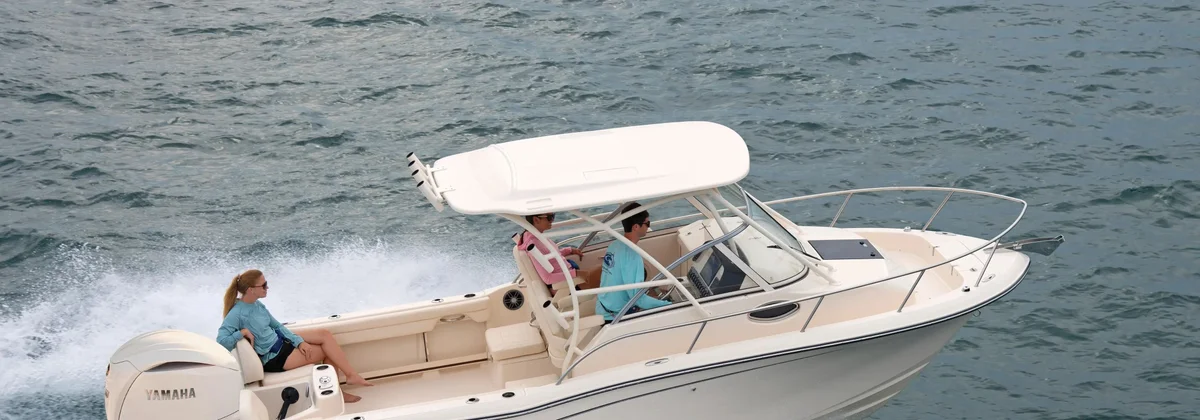
Quick answer: A cuddy cabin is shelter and lockable stowage, not accommodation. It takes the volume a bowrider would use for open bow seating and encloses it, giving you a V-berth, dry storage and usually somewhere to put a head. Below about 24 feet nobody should buy one expecting to sleep aboard comfortably; buy it for the shelter, the security and the toilet, which are the three reasons owners actually give.
What Fits Inside, by Size
| Length | What the cabin realistically holds | Headroom |
|---|---|---|
| 17 to 19 ft | Gear, wet weather kit, a cushion | Crawl space |
| 20 to 21 ft | V-berth for two at a squeeze, portable head | Crawl space |
| 22 to 24 ft | Proper V-berth, portable or small fitted head, storage | Sitting, sometimes |
| 25 to 27 ft | V-berth, fitted head with holding tank, small galley | Sitting, occasionally standing |
| 28 ft and up | Genuine small cruiser rather than a cuddy | Usually standing |
Insider tip: climb into the cabin and lie down before you buy, with the hatch closed. Every cuddy looks adequate through the doorway and a large number of them are unusable once an adult is actually in there with the hatch shut. The measurement that decides it is not the berth length quoted in the brochure, it is the width at shoulder height, which nobody publishes.
Against the Alternatives
| Cuddy cabin | Bowrider | Walkaround | |
|---|---|---|---|
| Forward volume used for | Enclosed cabin | Open seating | Small cabin plus side decks |
| Day capacity | Lower | Higher | Lower |
| Shelter from weather | Good | None | Good |
| Lockable storage | Yes | Minimal | Yes |
| Head | Common | Rare | Common |
| Overnight | Possible from 22 ft | No | Possible, tighter |
| Fishing access forward | Poor | Poor | Excellent |
| Resale market breadth | Moderate | Widest | Narrow, specialist |
The comparison people actually make is against the bowrider, and it is not about quality. It is about whether you want two more seats or a dry, locked, sheltered space. Families with small children and anyone boating in changeable weather tend to want the cabin; anyone whose boating is warm, social and short tends to want the seats. The other side is covered on the bowrider page, and the more-people-again option on the deck boat page.
Pros and cons of a cuddy cabin
| Advantages | Disadvantages |
|---|---|
| Shelter from sun, wind and rain on any day trip | Two fewer usable seats than a bowrider of the same length |
| Lockable stowage for electronics and valuables | Cabin is cramped below roughly 24 ft |
| A head aboard, which changes who will come boating | Ventilation is poor, and damp is the type’s chronic problem |
| Somewhere to change and to get children out of the sun | Foredeck blocks movement forward for fishing |
| Overnight possible at the larger sizes | Narrower resale market than a bowrider |
| Extends the boating season in cool climates | More surface to maintain, more places for water to enter |
The Chronic Problem: Damp
Every enclosed space on a small boat has the same enemy, and cuddy cabins get it worse than most because they are small, poorly ventilated and rarely opened between outings.
Water enters through the windscreen seal, the forward hatch, the deck fittings above the berth and the anchor locker bulkhead. It then sits in a cushion nobody lifted, in a space with no airflow, for weeks. The result is mildew at best and a wet, delaminated berth base at worst.
Three habits solve it. Lift the cushions on every haul-out. Fit or improve ventilation, because most factory arrangements are token. Trace and reseal the deck fittings above the cabin rather than treating each new stain as a mystery. The general schedule is in the boat maintenance checklist and the winter side in the winterization guide.
Buying One
Because the cabin is where the problems live, a used cuddy inspection is different from a used bowrider inspection.
- Get in the cabin with a torch and look at the underside of the foredeck, along every seam and around every through-deck fastener.
- Lift every cushion and press the berth base. Softness means water has been sitting there.
- Smell it. Mildew in a closed cabin is not subtle, and a boat that has been aired out for the viewing usually shows other signs.
- Check the windscreen seal and the forward hatch, which are the two most common entry points.
- Test the head and the holding tank if fitted, including the pump-out fitting, which is expensive to put right.
A cuddy that has spent its life on a mooring rather than a trailer deserves extra attention, because a cabin that is never opened between outings is the worst case for every problem above. Everything else follows the standard sequence in the used boat inspection checklist and how to buy a boat. Because cuddies at these sizes are almost always trailered, the boat trailer guide is part of the decision, and the running-cost picture is in the boat insurance cost guide and cost to dock a boat.
Cabin or open bow?
We can work through how you will really use the boat, in what weather and with whom, before the layout decides itself in a showroom.
Frequently Asked Questions
A small enclosed space under the foredeck of an otherwise open boat, reached through a hatch or a door in the windscreen. It typically contains a V-berth, storage, and on larger boats a portable or fitted head. It is shelter and stowage rather than accommodation, and that distinction is the whole point of the type.
In most sizes, yes, uncomfortably, for a night. The V-berth is usually a wedge of cushion with sitting headroom at best, and standing headroom almost never. Below about 24 feet treat it as a place to get out of the rain, change clothes and store gear dry. Above that the cabin starts to become a genuine overnight space.
A bowrider puts that same forward volume into open seating for two, so it carries more people on a day trip and feels bigger. A cuddy trades those seats for lockable, dry, sheltered space. Choose the cuddy if you value security, shelter from weather, a head, and the option of a night aboard; choose the bowrider if the boat is purely a day boat.
Under 20 feet the cabin is a storage locker with a cushion. Between 21 and 24 feet it becomes a usable shelter with a portable head and a real V-berth. From 25 feet up you start getting sitting headroom, a fitted head and a small galley, at which point the boat is arguably a small cruiser rather than a cuddy.
Reasonably, and a walkaround is better. The cuddy's foredeck blocks movement forward, so working a fish around the bow is awkward. A walkaround gives up some cabin volume to keep side decks clear, which is the trade fishermen usually want. For inshore fishing a center console or bay boat is a better tool again.
Often, and the type varies with size. Smaller boats carry a portable chemical toilet stowed under the V-berth; from roughly 24 feet up a fitted marine head with a holding tank becomes common. A head is the single most cited reason buyers move from a bowrider to a cuddy, so confirm what is actually fitted rather than what the brochure implies.
Damp, and everything that follows from it. Water enters through the windscreen seal, the forward hatch and the deck fittings above the berth, then sits in an unventilated space under a cushion nobody lifts. Mildew is the mild version; a delaminated berth base and wet deck core is the expensive one.
Request a yacht buyer consultation
Share your budget, target LOA, and use case. We reply within one business day with matched brokers or surveyors.