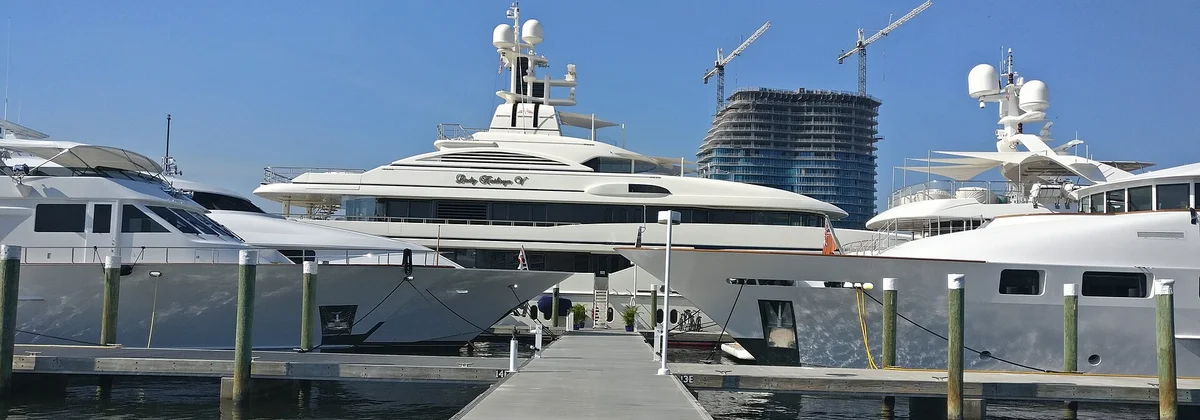
Quick answer: Palm Beach is an in-water show in late March with an unusually high brokerage concentration for its size. That combination is what makes it useful: the boats are afloat, so you can judge them properly, and the calendar position means you are meeting sellers who have carried a boat through a winter since Fort Lauderdale. It is a smaller, more focused week than Miami or Fort Lauderdale, and it is comfortably walkable in a day, which is exactly why serious buyers use it.
What Palm Beach Is For
Every show in the calendar answers a different question. Palm Beach answers: which of my three candidates do I actually want, and what is the seller’s position?
| Attribute | Palm Beach |
|---|---|
| Format | In-water, along the waterfront |
| Usual timing | Late March, typically 4 days |
| Character | Brokerage heavy, strong larger-yacht presence |
| Size to walk | A day, comfortably; two if you are boarding |
| Best for | Comparing shortlisted brokerage boats afloat |
| Weaker for | First-pass browsing across many categories |
| Sea trials | Possible, pre-arranged, usually after show week |
The show’s format matters more than its size. A boat in a cradle under exhibition lighting tells you about its interior and nothing else. Afloat, the same boat tells you how it sits with tanks part full, whether the swim platform is where the brochure implies, how the companionway works at the angle it will really be at, and what the machinery sounds like from the aft cabin. That difference is set out at length in the boat show calendar.
What is on the docks, by size
Palm Beach’s shape is different from a retail winter show. The centre of gravity sits well above the volume end of the market.
| Size band | Presence at Palm Beach | What you will find |
|---|---|---|
| Under 25 ft | Light | Tenders, centre consoles, dealer stands |
| 25 to 40 ft | Moderate | Production dayboats and express cruisers |
| 40 to 60 ft | Strong | The core of the brokerage inventory |
| 60 to 90 ft | Strong | Where the show earns its reputation |
| 90 to 150 ft | Present, by appointment | Larger brokerage and charter yachts |
| Over 150 ft | A handful | Usually the headline boats |
If your budget puts you under 40 ft, an indoor regional show or Miami will show you more relevant boats in less time. From 40 ft upward the density here works in your favour.
The Calendar Position Is the Point
This is the part most buyer guides miss, and it is the single most useful thing to understand about the March date.
The US brokerage year has a shape. Fort Lauderdale in late October is the largest concentration of brokerage inventory in the world. Boats that do not sell there go into a Florida winter with a slip bill, insurance, crew where applicable, and an owner who has now been trying to sell for several months. By late March those boats have carried five months of cost since the biggest selling opportunity of the year.
| Boat’s history | What it implies at Palm Beach |
|---|---|
| New to market in March | Seller is fresh, expectations are highest |
| Shown at Fort Lauderdale in October, unsold | Five months of carry, expectations softening |
| Reduced once since October | Seller is engaged, not merely listed |
| Reduced twice since October | Motivated; ask why it has not sold |
| Returning for a second Palm Beach | Something is wrong with price, condition or presentation |
Insider tip: before you go, look up how long each candidate has been listed and whether the asking price has moved. A boat’s time on market and its reduction history tell you more about the negotiation ahead of you than anything the broker will say on the dock. The general mechanics are in the price negotiation guide.
What You Can Actually Judge on a Show Dock
Be realistic about what show week can and cannot establish.
| Question | Answerable at the show? |
|---|---|
| Layout, finish, headroom, storage | Yes, and this is what shows are for |
| How it sits in the water with load | Yes, which cradle shows cannot do |
| Deck work at real freeboard | Yes |
| Machinery space access | Usually, if you ask properly |
| Noise under way | No, unless a trial is arranged |
| Moisture in the deck or hull | No |
| Engine condition | No |
| Systems under load | No |
A show is a shortlisting instrument, not a survey. The pages on what a survey covers and the pre-purchase survey guide set out what has to happen afterwards, and none of it happens on a dock in March.
Working the Week
Before you fly. Register in advance. Book accommodation early, because West Palm Beach and the surrounding towns fill for the week and late booking is expensive. Send your broker a written shortlist of specific hull numbers or listings you want to board, so that appointments exist before the doors open rather than being negotiated in a queue.
On the docks. Board fewer boats properly rather than many boats briefly. Take your own photographs of machinery spaces, bilges and the underside of hatches, because those are the pictures nobody puts in a listing. Ask the broker directly how long the boat has been listed and what has changed on the price.
Booking the follow-up. Every competent surveyor in south Florida is committed during show week. Line up a survey slot for the fortnight afterwards, and expect the sea trial to happen then too. The survey cost guide covers what that stage costs, and the sea trial checklist covers what to test when it happens.
After the doors close. The two weeks after any major in-water show are frequently a better buying window than the show itself. A dealer who brought six boats to a dock and sold four now has two boats and a storage bill starting. Brokers know this, and it is why so many accepted offers on show boats carry a date in the fortnight after the show.
What the Week Actually Costs
Budget the trip honestly, because a show visit that produces one good decision is cheap and a rushed one is not.
| Line | Typical range | Note |
|---|---|---|
| Show admission, per day | $40 to $75 | Multi-day and VIP tickets cost more |
| Parking or transport, per day | $20 to $50 | Shuttle and remote lots are usual |
| Hotel, per night, show week | $250 to $600 | Book 3 to 6 months ahead |
| Flights | Varies | March is Florida high season |
| Broker’s time | No charge to the buyer | The seller pays the commission |
| Survey, booked for afterwards | $20 to $30 per ft | See the survey cost guide |
| Short haul-out for that survey | $300 to $900 | Depends on size and yard |
Against a purchase in the hundreds of thousands, the entire trip is a rounding error, and the one thing worth spending on is time: two full days of properly booked appointments beats four days of queueing.
Pros and cons of buying at Palm Beach
| Advantages | Disadvantages |
|---|---|
| Boats are afloat, so the judgement is real | Weather dependent, and March can be hot on a dock |
| High brokerage density for a walkable footprint | Fewer boats overall than Miami or Fort Lauderdale |
| The March date meets sellers who have carried a winter | Everyone else knows that too, so it is a busy week |
| Brokers, lenders and insurers in one place | Surveyors are unavailable during show week |
| Easy to compare three candidates in a day | Not a good first-pass browsing show |
| Good access to larger yachts for its size | Less new-boat retail than an indoor winter show |
Which Buyer Should Go
| Buyer | Is Palm Beach the right week? |
|---|---|
| Shortlisted three brokerage yachts, wants to choose | Yes, this is the ideal use |
| Starting out, unsure of type or size | No, go to an indoor winter show first |
| Buying a new production boat | Possible, but Miami and the winter shows carry more retail |
| Looking at 60 ft and above | Yes, the presence at that size is strong for the footprint |
| Small trailerable boat buyer | No, the regional winter shows serve you better |
| Wants sea trials during the visit | Only with appointments made weeks ahead |
If you are earlier in the process than that, read how to buy a yacht and buying a yacht at a boat show first, then use the show calendar to pick the week that matches your stage. If your budget is under about 45 ft, the Miami show guide is a better fit, and if you want the deepest brokerage inventory in the world, the Fort Lauderdale guide covers the October week.
The Money Conversations to Have Before You Go
Show week compresses decisions, which is precisely why the financial groundwork should be done before you arrive rather than in a tent on the dock.
- Finance. Know your approved amount and structure. The mechanics are in the boat loans guide and marine mortgage guide.
- Insurance. Cover on a Florida-berthed boat is its own subject, and a quote takes days rather than hours. Start it before the show; the drivers are in the Florida yacht insurance guide.
- Sales tax. Florida’s structure, including the cap, changes the arithmetic materially. See the Florida vessel sales tax cap and boat sales tax by state.
- Closing costs. Budget for them explicitly rather than discovering them; the list is in yacht closing costs.
- Deposit and escrow. Never hand money to anyone without the structure in the deposit and escrow guide.
Going to Palm Beach in March?
Send us your shortlist and we will tell you what each boat's listing history actually says before you walk the dock.
Frequently Asked Questions
It usually runs over four days in late March along Flagler Drive in West Palm Beach. Organisers confirm exact dates roughly a year out and occasionally move them for venue reasons, so check the official date before booking flights or a surveyor. March placement matters: it sits after the winter shows and before the northbound spring delivery season.
Buying, more than most. The brokerage concentration is high relative to the show's footprint, the boats are in the water, and a large share of the audience is there with a budget and a broker. If you want to walk twenty boats casually, an indoor winter show is easier; if you want to compare three real candidates afloat, Palm Beach is one of the best weeks in the calendar.
Fort Lauderdale in late October is larger and has the deepest brokerage concentration of any show anywhere. Palm Beach in March is smaller, easier to walk in a day, and sits at a different point in the selling year. Boats unsold since Fort Lauderdale often reappear at Palm Beach with a seller who has now carried them through a winter, which is a materially different negotiation.
Sometimes, and only if it is arranged before you arrive. Show week is the busiest week of the year for the brokers and captains involved, and a boat on a show dock is usually boxed in by other boats. Ask for the trial to be scheduled for the days immediately after the show rather than during it.
On new production boats, show pricing is usually a genuine package of included options rather than a discount on the hull, and it is normally available for a short window after the show as well. On brokerage boats there is no such thing as show pricing; there is a seller, an asking price and a market, and the show is simply where you meet them.
Register in advance, book accommodation early because the town fills, tell a broker which specific boats you want to board so appointments exist before the doors open, and have finance and insurance pre-conversations done. Line up a surveyor for the fortnight after the show rather than during it, because every good surveyor in south Florida is committed during show week.
Yes, but treat it as education rather than shopping, and say so to the brokers you meet. An in-water show is the fastest way to learn what a given length actually feels like afloat, which is the single most common misjudgement first-time buyers make. Just do not expect the week to be efficient for browsing across many categories.
Request a yacht buyer consultation
Share your budget, target LOA, and use case. We reply within one business day with matched brokers or surveyors.