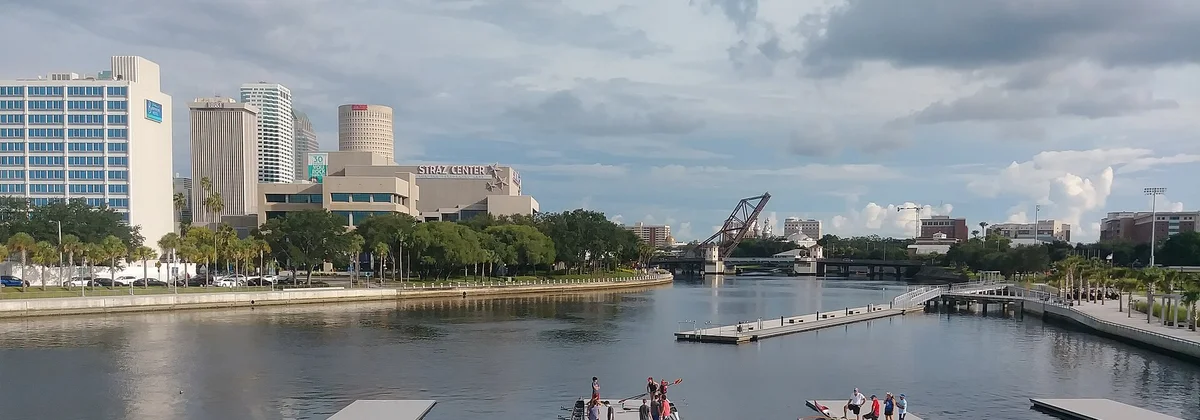
Quick answer: Tampa Bay is enormous and shallow, and that single fact should decide the boat before any brochure does. Extensive grass flats, marked channels and a bay that builds a short chop when the sea breeze fills mean the local fleet is built around bay boats and mid-size centre consoles, not around either flats skiffs or offshore hulls. The second fact is the address: Florida insurance carries a named-storm deductible as a percentage of hull value, and that belongs in the budget before the purchase.
Depth Decides the Shortlist
| Condition | What it implies for the hull |
|---|---|
| Very shallow over large areas | Shallow draft, and a jack plate is not a gimmick |
| Extensive grass flats | Draft and an owner who reads a chart |
| Marked channels doing the work | Local knowledge matters more than horsepower |
| Sea breeze chop most afternoons | Enough deadrise to stay comfortable |
| Passes out to the Gulf | Real deadrise, but only if you use them |
| Oyster bars and spoil islands | Draft again, and a plotter you trust |
The type built for exactly this is the bay boat: roughly 18 to 24 ft, drawing somewhere between about 12 and 20 inches with the engine up, with enough deadrise to cross open bay when the afternoon wind arrives. Above that, centre consoles take over for anyone genuinely running the passes.
Insider tip: compare boats on transom deadrise, which builders publish and buyers ignore. Two 22 ft boats at, say, 12 degrees and 18 degrees are different machines here: the flatter one runs shallower and fishes better at anchor, the deeper one is dry and comfortable when the sea breeze fills in at two in the afternoon. On a bay this wide, that difference decides how often you go out.
The Offshore Trap
Almost every first-time Florida buyer overbuys, and it happens the same way: they buy for the offshore trip they picture rather than the bay fishing they will actually do.
| What buyers picture | What most owners do | |
|---|---|---|
| Trips beyond the passes per year | Every other weekend | A handful |
| Typical trip | 30 miles offshore | Inside the bay |
| Boat that fits it | 28 to 32 ft offshore centre console | 20 to 24 ft bay boat |
| Fuel per outing | Substantial | Modest |
| Draft, and where you can go | Restricted to channels | Everywhere |
| Annual cost | Considerably higher | Manageable |
The correction is simple and unpopular: buy the boat for the trip you take twenty times a year, and charter for the trip you take twice. A bay boat that goes out every weekend delivers more boating than an offshore hull that stays on the lift because the fuel bill is daunting.
Hurricane Season Is a Line in the Budget
| Item | What to establish before you buy |
|---|---|
| Named-storm deductible | Usually a percentage of hull value, not a flat sum |
| Standard deductible | Separate, and far smaller |
| Written hurricane plan | Many policies require one, agreed in advance |
| Haul-out obligations | Some policies require removal at a named trigger |
| Storage type | Wet slip, dry stack and trailer price very differently |
| Binding during a named storm | Cover generally cannot be bound with a storm in the box |
That last row is the one that catches September buyers. Insurers commonly suspend binding new cover while a named storm is in the forecast area, which can delay a closing by days at exactly the wrong moment. The mechanics are in the named storm deductible guide and hurricane zone yacht insurance, with the Florida specifics in the Florida yacht insurance guide.
Reading a Draft Figure Honestly
Published draft is measured in the kindest possible way, and on a bay this shallow the difference between the brochure and reality decides where you can actually go.
| Load state | Effect on draft |
|---|---|
| Published specification | Empty tanks, no crew, engine trimmed up |
| Full fuel | Meaningfully deeper on a 20 to 24 ft hull |
| Four adults and gear | Deeper again, and the trim changes |
| Full livewells | Hundreds of pounds nobody counted |
| Engine down and running | The trim position sets the true minimum |
A jack plate is the standard answer, letting the engine sit higher when idling into shallow water, and it is one of the few options that changes what the boat can do rather than how comfortable it is. Ask what the boat drafts loaded, with the crew you actually carry, and treat any single number quoted without those qualifiers as marketing.
One more habit worth forming: on grass flats, running aground is not the main risk to the boat, it is the main risk to the grass. Idle out of shallow water rather than powering off, and stay in the marked channels where they exist.
Where the Boat Lives, and What It Costs
| Option | Typical range | Practical note |
|---|---|---|
| Wet slip | $20 to $40 per ft per month | Most convenient, most exposed |
| Dry stack | $250 to $700 per month | Very popular here, caps size and beam |
| Trailer at home | Near zero | Can be moved inland before a storm |
| Lift at a private dock | Varies | Excellent, if you have the dock |
| Bottom paint, per haul | $25 to $50 per ft | Not needed if dry stacked or trailered |
| Survey, if buying used | $20 to $30 per ft | Book ahead of the winter season rush |
Dry stack is worth more attention in Tampa than in most markets: it removes bottom growth, keeps the boat out of the water between uses, and materially changes the storm conversation. The wider comparison is in cost to dock a boat, and Florida’s sales tax structure, which has its own cap, is in the Florida vessel sales tax cap guide.
Two further points on where the boat lives. A lift at a private dock is the best answer available if you have the dock, because it combines instant access with the boat out of the water. And a covered slip carries a real premium here for the same reason a hat does: sun destroys upholstery, canvas and gelcoat faster than use ever does, and shade is worth more in Florida than in almost any other market in the country.
Pros and cons of buying at the Tampa show
| Advantages | Disadvantages |
|---|---|
| Inventory matches the bay precisely | Indoors, so nothing about ride is answerable |
| Year-round season, so the boat is used at once | Hurricane exposure raises the cost of ownership |
| Strong bay boat and centre console selection | Thin above roughly 45 ft |
| Dealers, finance and insurance in one place | September sits inside hurricane season |
| Dry stack and storage options well represented | Salt water is harder on a boat than fresh |
| Excellent cost per usable day | Package pricing is easy to mistake for a discount |
Which Buyer Should Go
| Buyer | Is Tampa the right show? |
|---|---|
| Inshore and bay fishing | Yes, this is the core of the floor |
| Family day boat on the bay | Yes |
| Occasional Gulf trips through the passes | Yes, but be honest about frequency |
| Flats and skinny water specialist | Partly, a dedicated skiff dealer serves you better |
| Brokerage yacht over 45 ft | No, Fort Lauderdale or Palm Beach |
| Sailboat buyer | Limited, Annapolis in October is the show |
Earlier in the process, read how to buy a boat and buying a yacht at a boat show, and use the show calendar to place it against the Florida in-water weeks. If you are buying used, run the used boat inspection checklist, with particular attention to wet decks and corroded bonding, which salt and sun punish faster here than almost anywhere.
Buying on Tampa Bay?
Tell us how often you would really run the passes, and we will tell you whether you need an offshore boat or a bay boat and a charter.
Frequently Asked Questions
The main show usually runs in September over three or four days at the fairgrounds, with separate in-water shows around the bay at other points in the year. Confirm dates with the organiser. September sits inside hurricane season, which is worth knowing because it is also when insurers are least relaxed about binding new cover.
Something shallow. Tampa Bay is very large and mostly very shallow, with extensive grass flats and marked channels doing a lot of the work. Bay boats and mid-size centre consoles dominate for that reason: enough draft relief to leave the channel, enough deadrise to handle the chop the bay builds when the wind gets up.
Only if you actually intend to run out through the passes into the Gulf. Most Tampa owners spend the overwhelming majority of their time inside the bay, where a bay boat is a better tool than an offshore hull: it draws less, fishes better and costs less to run. Buy for the fishing you do, not the fishing you picture.
It shapes insurance and storage rather than the boat itself. Florida policies typically carry a named-storm deductible expressed as a percentage of hull value rather than a flat sum, many require an agreed written hurricane plan, and underwriters price a wet slip, a dry stack and a trailer very differently. Settle all of it before you commit.
In cost per usable day, decisively yes. A Florida boat can be used in every month, which spreads the same annual cost across roughly twice as many outings as a northern boat. What offsets it is insurance, salt corrosion, bottom growth and the storm exposure that comes with the address.
A show is where you look at many boats quickly and compare packages; a broker is who works a specific transaction. In Florida the two overlap, because brokers exhibit. Use the show to shortlist and to meet people, and expect the actual purchase, survey and closing to happen in the weeks afterwards.
More than in most markets. It keeps the boat out of the water between uses, which removes bottom growth and the paint cycle that goes with it, and it changes the storm conversation because a boat on a rack inland is a different risk from one afloat. It caps the size and beam you can buy, which is the trade.
Request a yacht buyer consultation
Share your budget, target LOA, and use case. We reply within one business day with matched brokers or surveyors.